Flagsmith Alternatives: 8 Platforms Compared in 2026

This guide is for engineering teams comparing Flagsmith against eight alternatives, from LaunchDarkly's enterprise incumbency to Unleash's open-source roots, GrowthBook and Statsig's warehouse-native experimentation, and PostHog's analytics-first approach, on pricing, key features, differentiation points, and real G2 ratings.
We also cover what Flagsmith is best at and why you might want a Flagsmith alternative, with category breakdowns for startups, developers, and security-conscious enterprises, and an FAQ covering the questions people ask most.
Flagsmith alternatives compared at a glance
Here's how Flagsmith and the eight alternatives covered in this guide stack up, with G2 ratings pulled directly from each platform's own review page, as of November 2026.
Harness's listed score covers the whole Harness platform, as its feature management and experimentation module doesn't have a separate G2 listing of its own.
Why Flagsmith might be exactly what you need
Flagsmith's G2 rating makes it the best-reviewed feature flag management platform on this list. If your top priority matches any of these bullets, then Flagsmith might well be the tool you need.
- Open source. The core platform is open source and inspectable on GitHub, not a black box you have to trust blindly
- Affordability. A free plan covers unlimited feature flags, environments, and segments, with paid tiers starting at $45 a month rather than a custom quote.
- Flexibility. Boolean and multivariate flags, user segments, flag-based experimentation, and A/B and multivariate testing cover most teams' day-to-day needs without forcing you into a bigger platform than you need.
- Transparent pricing. Every tier is published on the pricing page, so you can budget before you talk to sales.
- No vendor lock-in. Because the core is open source, you're never stuck if a vendor's roadmap or pricing stops working for you. You can run Flagsmith as a hosted service today and migrate to self-hosting tomorrow without losing your data.
- Data control and security. Thanks to self-hosting and private cloud deployment, sensitive data never has to leave your own infrastructure—a valuable feature when data sovereignty is required in regulated industries.
Flagsmith is not the right fit for every team. Consider the alternatives below if your top priority is something else, such as built-in product analytics and session replay, a large support team, a deep statistical engine, or the history of enterprise support that only an incumbent like LaunchDarkly can offer.
The best Flagsmith alternatives
Here's how the eight biggest Flagsmith alternatives actually compare on key features, pricing, and the genuine trade-offs involved.
1. LaunchDarkly
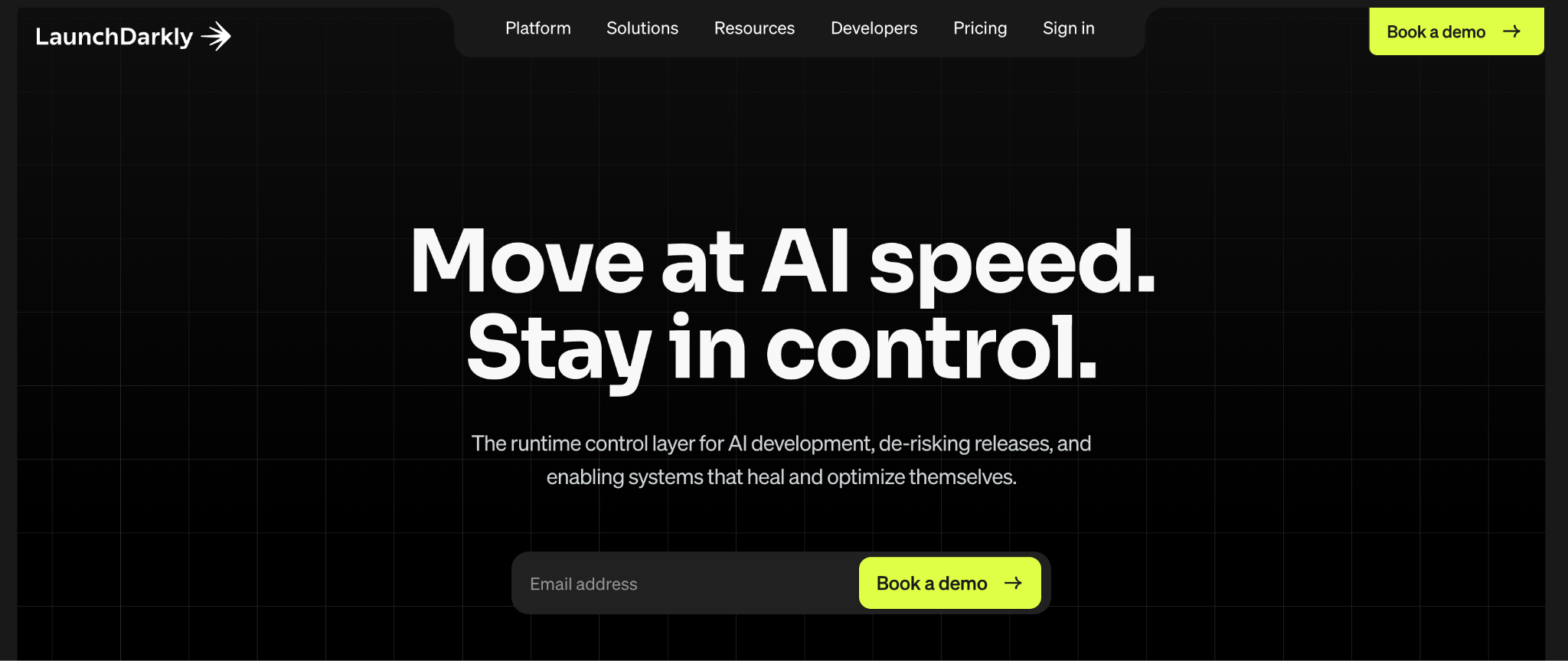
Best for: Large enterprises that want deep experimentation statistics and AI-release tooling available off the shelf.
LaunchDarkly has been the default name in feature flagging since 2014, and many enterprise customers have put it through its paces. If a long track record and a well-staffed support organisation are important to you, LaunchDarkly is hard to beat.
Its experimentation capabilities include a full statistical engine with CUPED, sequential testing, and multi-armed bandits, bundled into every tier for free. It also offers AgentControl and Release Autopilot, purpose-built tooling that helps teams release and guardrail AI agent features.
LaunchDarkly is a solid option for teams running high-stakes, high-volume experimentation programmes.
However, users have less choice when it comes to deployment and face a higher cost. LaunchDarkly is cloud SaaS only, so there's no self-hosted or private cloud option if data residency is a concern.
Governance essentials like SSO, SCIM, and mandatory approval workflows all sit behind a custom-quoted Enterprise plan, and the Foundation tier layers several metered components—including service connections, client-side monthly active users, and AI agent runs—that make the costs harder to predict than a flat tier.
Features
- Unlimited boolean and multivariate flags on every tier, including the free Developer plan.
- Built-in experimentation with CUPED, sequential testing, and multi-armed bandits, included free rather than gated to a higher tier.
- AgentControl for configuring and guardrailing AI agent releases.
- Release Autopilot for automated flag cleanup and progressive rollouts.
- Warehouse integrations with Snowflake, Databricks, BigQuery, and Redshift.
- Session replay, error tracking, and distributed tracing built into the observability layer.
2. Unleash
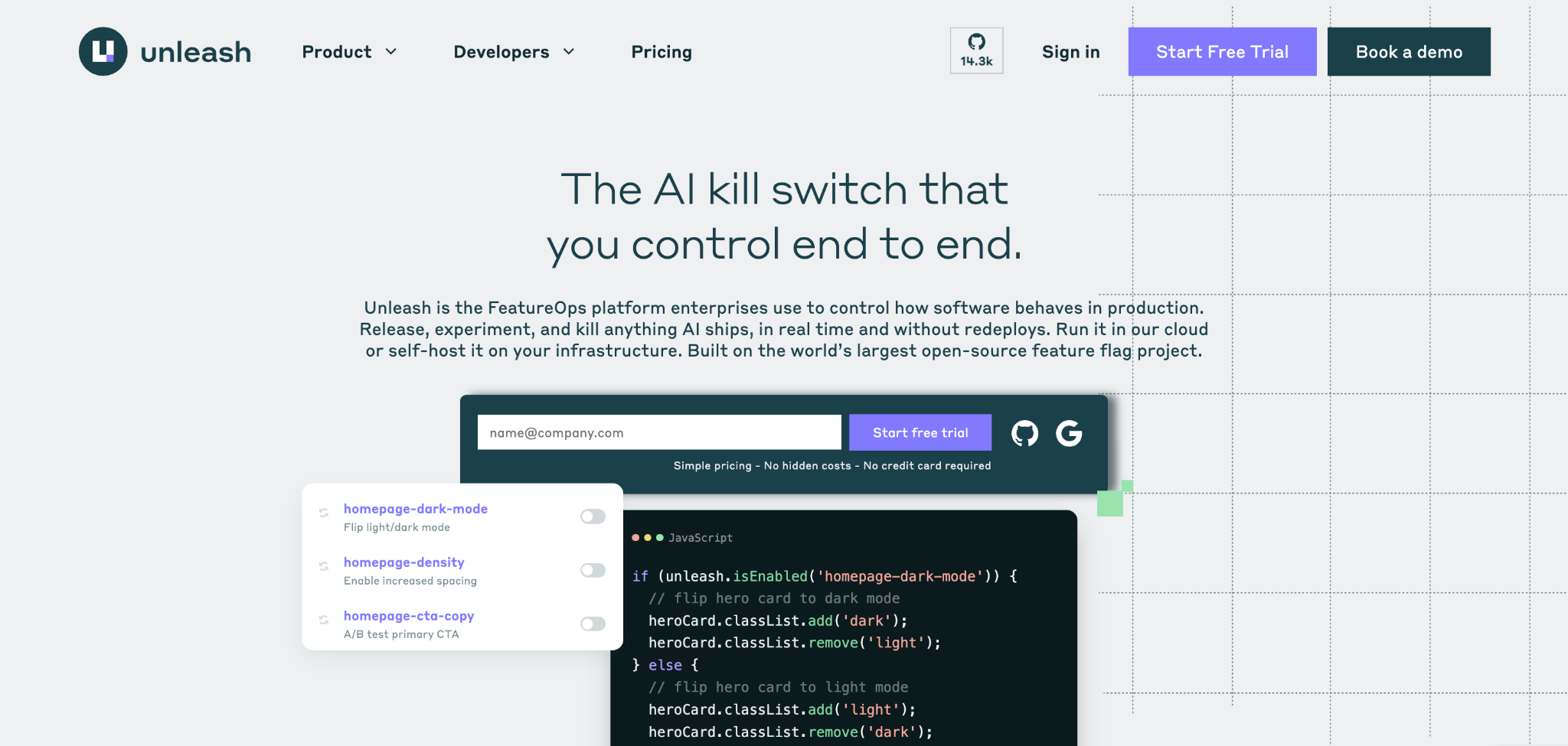
Best for: Teams in regulated industries that want an open-source solution with a clear path to paid enterprise support.
Unleash and Flagsmith share the same open-source DNA and both support self-hosting for free. The question is, which open-source ecosystem and governance tooling actually fits your team?
Unleash is among the oldest dedicated open-source feature flag platforms, with a correspondingly large SDK ecosystem and community behind it.
It has robust stale flag detection tooling: a dedicated dashboard that tracks ageing feature toggles and automatically alerts on the ones due for stale flag cleanup. Unleash also ships a lot of SDKs across multiple languages out of the box, which helps if your stack spans a lot of different frameworks.
Where it gets less generous is the free tier's limits. Unleash caps the open-source plan at one project, two environments, and 5,000 flags, with no SSO or role-based access control until you pay, and Enterprise pricing scales per seat at $75 a month, which can add up fast for a larger team.
Features
- Unlimited flags, projects, and environments on paid Enterprise tiers.
- Custom activation strategies for fine-grained targeting rules beyond simple percentage rollouts.
- Dedicated stale-flag dashboard with automated cleanup alerts.
- Four-eyes approval workflows and change request review.
- 25+ official SDKs across languages and frameworks.
- US and EU data residency options.
3. GrowthBook
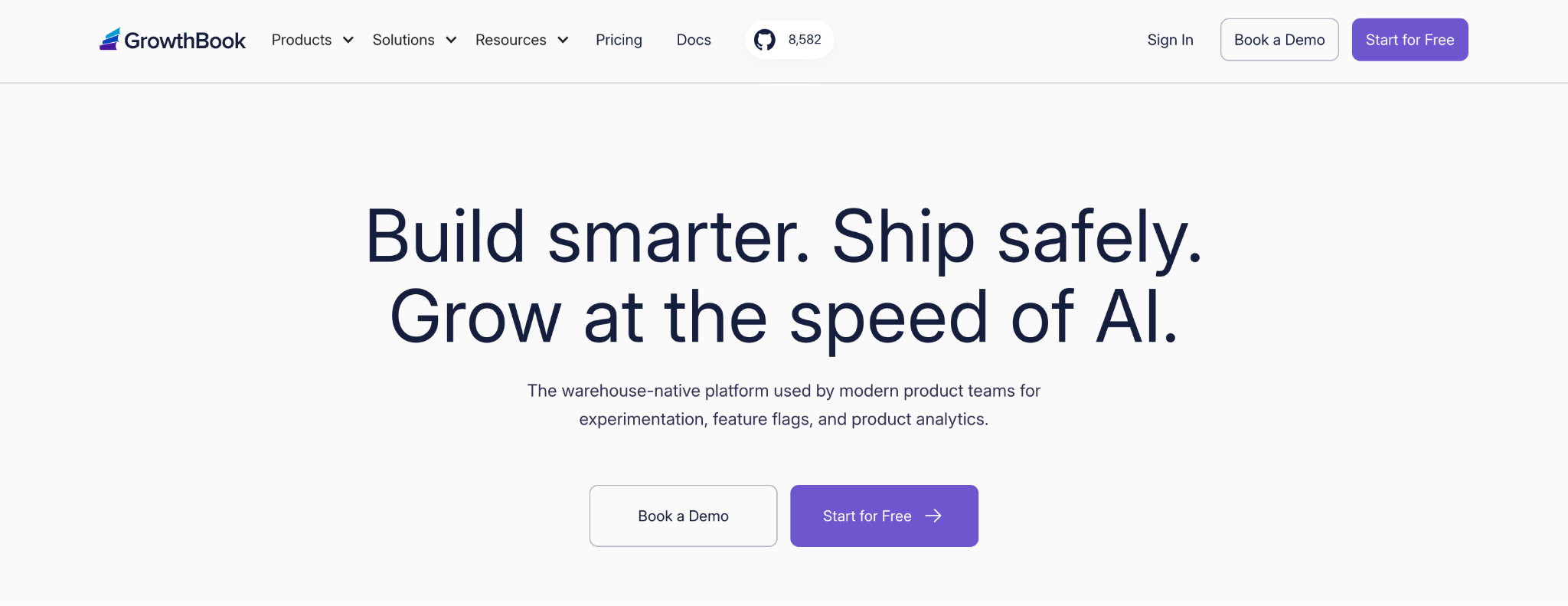
Best for: Data and growth teams that want experimentation to run directly against a data warehouse they already use.
Like Flagsmith, GrowthBook doesn't store experiment data in its own system. It connects to the data warehouses that are already part of your existing infrastructure, whether that's Snowflake, BigQuery, Redshift, or Databricks, and layers feature flagging and statistical analysis on top, with every query visible as auditable SQL.
GrowthBook offers warehouse-native analysis as its default architecture on every plan. If your team already centralises analytics in a warehouse and wants that built in from the start rather than configured afterwards, GrowthBook can help.
As it is open source, GrowthBook is also fully self-hostable at no cost, again like Flagsmith.
The catch is review volume and interface polish. GrowthBook has the fewest number of G2 reviews, and its user interface leans more technical than Flagsmith's, making it less intuitive for non-technical users who want to self-serve.
Features
- Warehouse-native architecture connecting directly to Snowflake, BigQuery, Redshift, or Databricks.
- Bayesian and frequentist statistical analysis engines, switchable per experiment.
- Visible SQL behind every result, for auditing how a number was calculated.
- Unlimited feature flags, experiments, and traffic, even on the free Starter cloud tier.
- AI Visual Editor and multi-armed bandits on the Pro tier.
4. Statsig
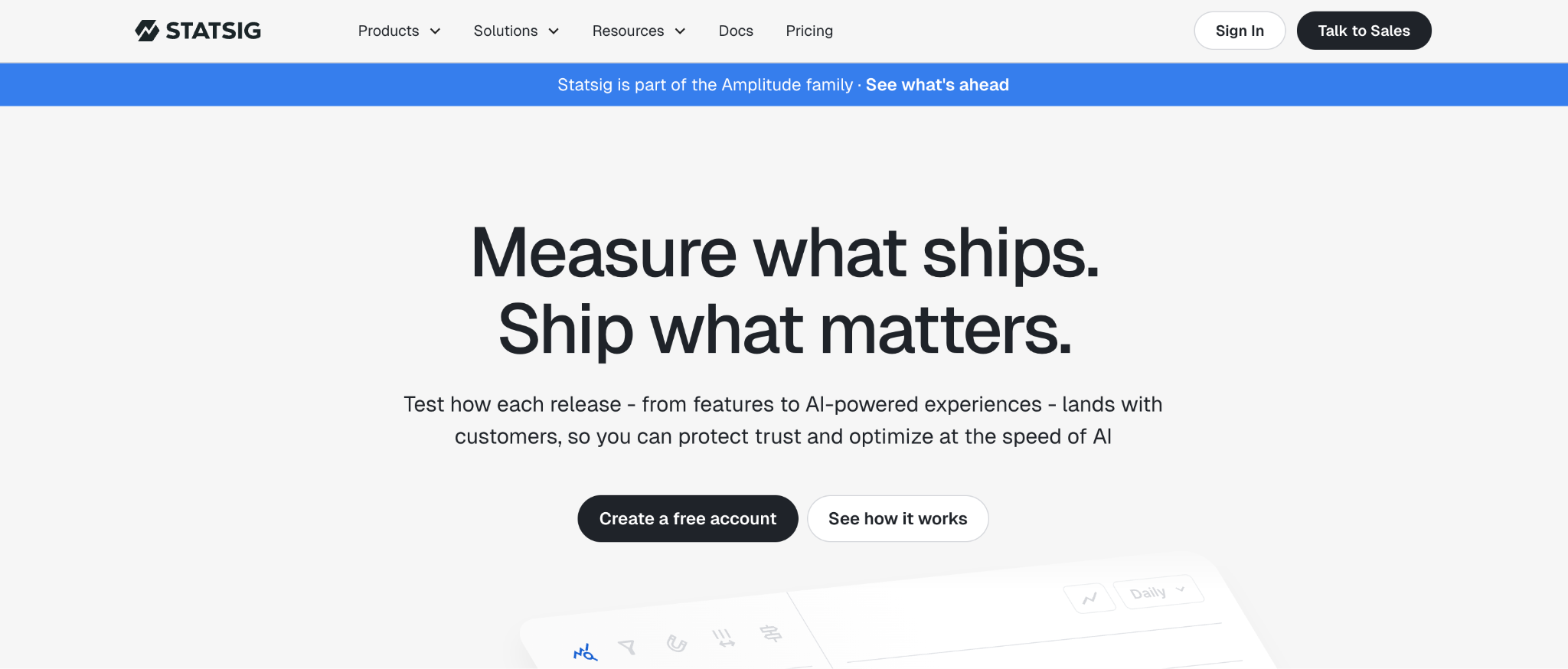
Best for: Engineering and data teams that run frequent experiments and want flags, analytics, and session replay on one platform.
Statsig was built by engineers who'd previously worked on experimentation at Facebook. They have bundled a lot into the tool's free tier: feature flags, a genuinely deep statistics engine, product analytics, and session replay all draw from the same event pipeline, with 2 million free analytics events a month before you pay anything.
Statsig offers both breadth and statistical depth. Its A/B and MVT testing offers product analytics and session replay, while its statistical methods include CUPED variance reduction, sequential testing, and multi-armed bandits.
It is a good option for a team that wants to see not just whether a flag change worked, but why.
However, users will encounter a lack of deployment flexibility and billing predictability. Statsig doesn't offer a self-hosted option at all, so if data residency rules out pure cloud SaaS for you, it's not a fit, and its usage-based event billing is harder to forecast than a flat seat-based or request-based plan.
Features
- Feature gates, Statsig's term for flags, covering boolean and multivariate use cases.
- Advanced statistical methods including CUPED variance reduction, sequential testing, and multi-armed bandits.
- Native product analytics, including funnels, retention, and user journeys, on the same pipeline as flags.
- Session replay for web and mobile.
- Warehouse native mode for deployment directly against your data warehouse, on the Enterprise tier.
- Automated stale-flag alerts.
5. PostHog
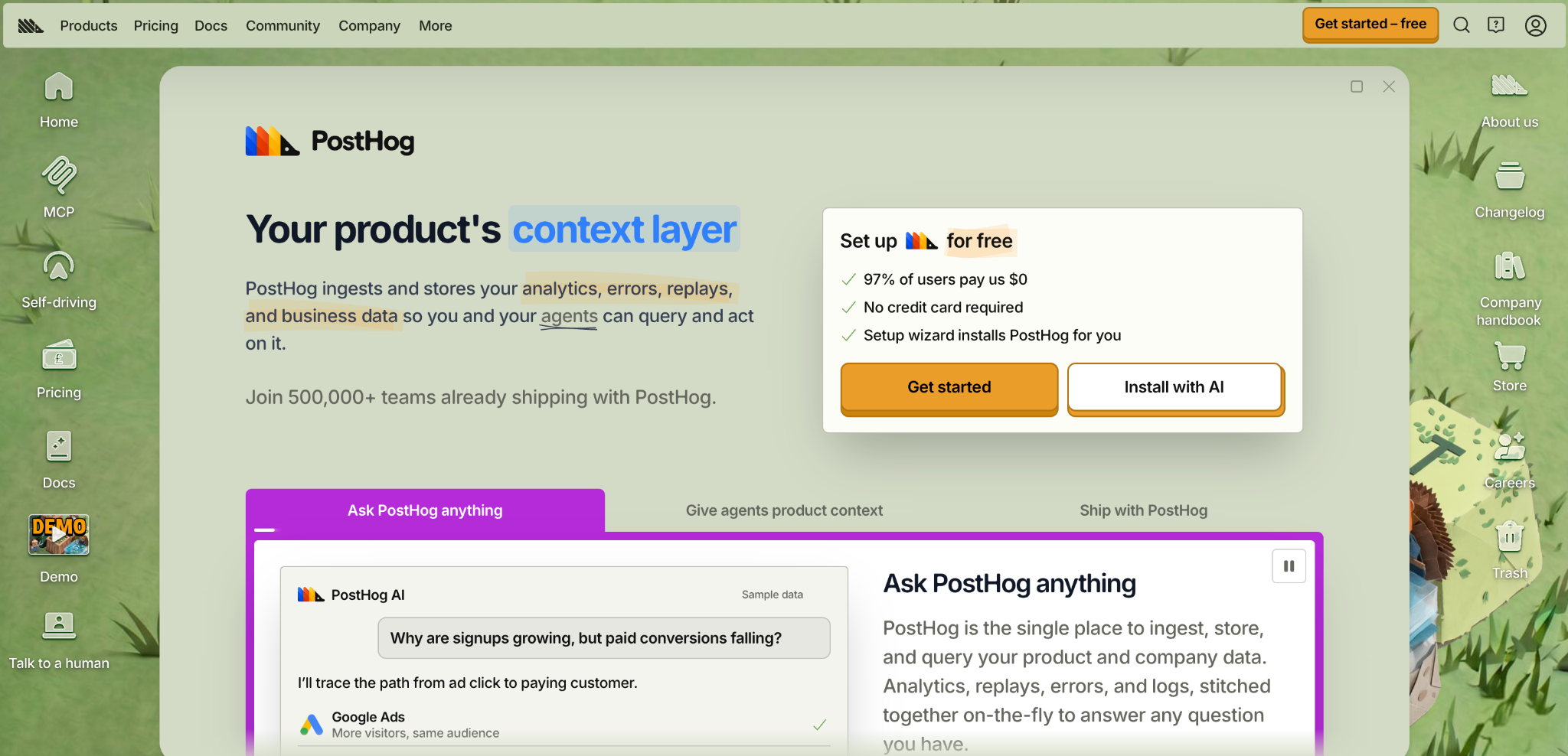
Best for: Product teams that want feature flags built into a full product analytics suite, with a genuinely generous free tier.
PostHog was started as an open-source product analytics tool and expanded from there, so flags sit alongside session replay, error tracking, and a full analytics suite.
PostHog's built-in analytics and combined platform save you from standing up a second tool. It includes product analytics and session replay alongside feature flag features, so it can help you see exactly how users behaved around a flag change – not just enable you to control the flag itself.
PostHog also ships AI- and MCP-based tooling for creating and cleaning up flags directly from an editor like Cursor or VS Code.
However, PostHog truly benefits teams that need all its features, not just a feature flag platform. A platform team that only wants flags ends up navigating, and potentially paying for, a lot of surface area it doesn't use. Its usage-based pricing, billed per product, is also harder to forecast than a flat tier.
Features
- Boolean and multivariate flags with JSON payloads.
- Native product analytics, session replay, and error tracking on the same platform.
- AI and MCP-based flag management from tools like Cursor, Claude, and VS Code.
- Local evaluation and bootstrapping for low-latency feature flag evaluations.
- Instant rollbacks and a detailed history of flag changes over time.
- Generous free allowance across every product, resetting monthly.
6. ConfigCat
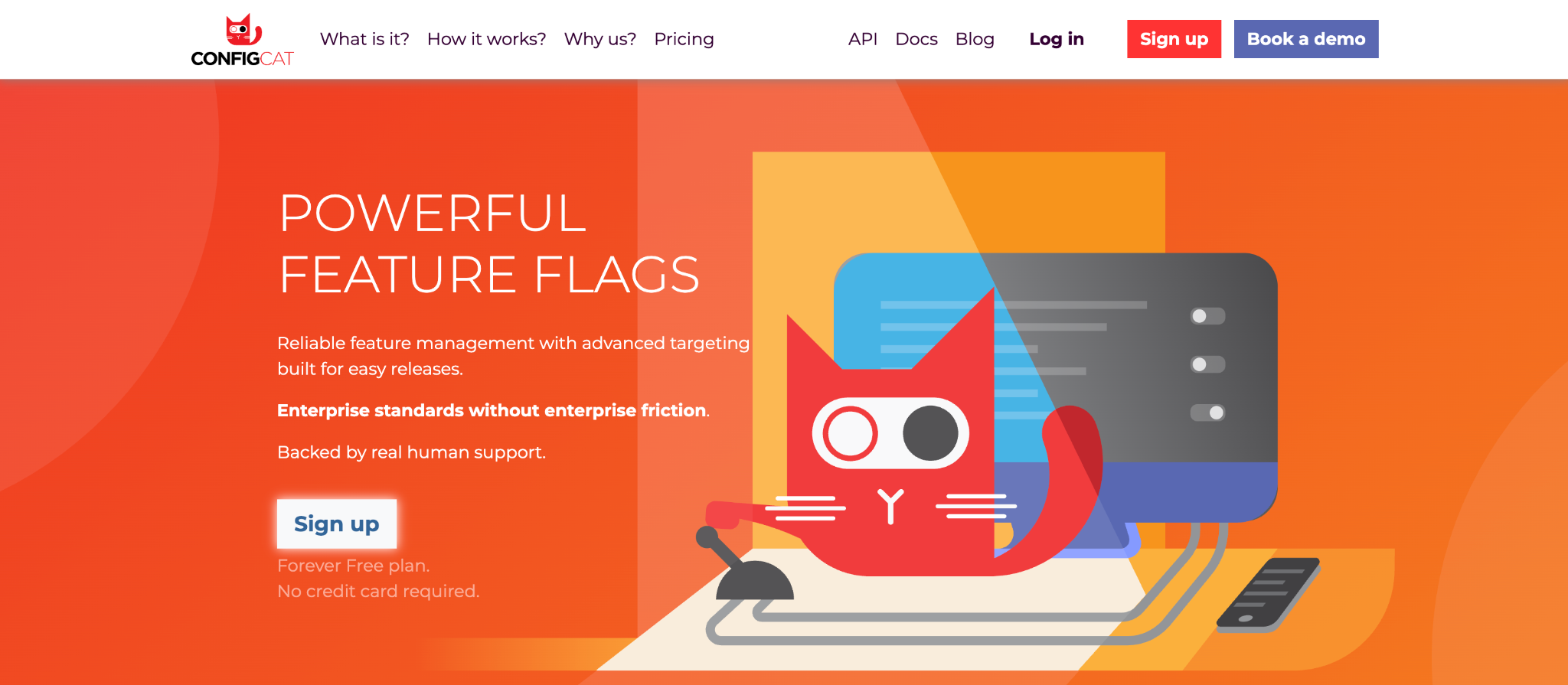
Best for: Teams that want feature flagging kept simple, with fully transparent, flat pricing and no per-seat charges.
ConfigCat takes the opposite approach to Statsig and PostHog. Its core job is to manage feature flags and remote configuration, handling basic feature flagging as simply as possible, with the pricing and interface to match. Every tier, including the free plan, includes unlimited team members, a genuinely different pricing model to almost everything else on this list.
ConfigCat makes costs predictable for larger teams with modest flag counts. Its pricing scales by flag, environment, and product count, with unlimited seats on every tier. For an organisation with a lot of people who occasionally need access but relatively few flags in play, that model can work well.
However, ConfigCat doesn't offer much depth and has no built-in experimentation platform at all, so you'll need to pair it with other tools, such as your existing analytics platforms, for genuine A/B testing, and it's closed source rather than open, so you don't get the code transparency or self-hosting freedom Flagsmith offers.
Features
- Unlimited team members on every tier, including the free plan.
- Targeting rules and segments that scale in granularity by tier.
- Stale flag detection tooling built into the dashboard.
- 18+ official SDKs and 18+ third-party integrations, including Datadog, GitHub, and Slack.
- ISO 27001:2022 certification and GDPR compliance.
- A dedicated on-premises tier for teams that need one.
7. Harness
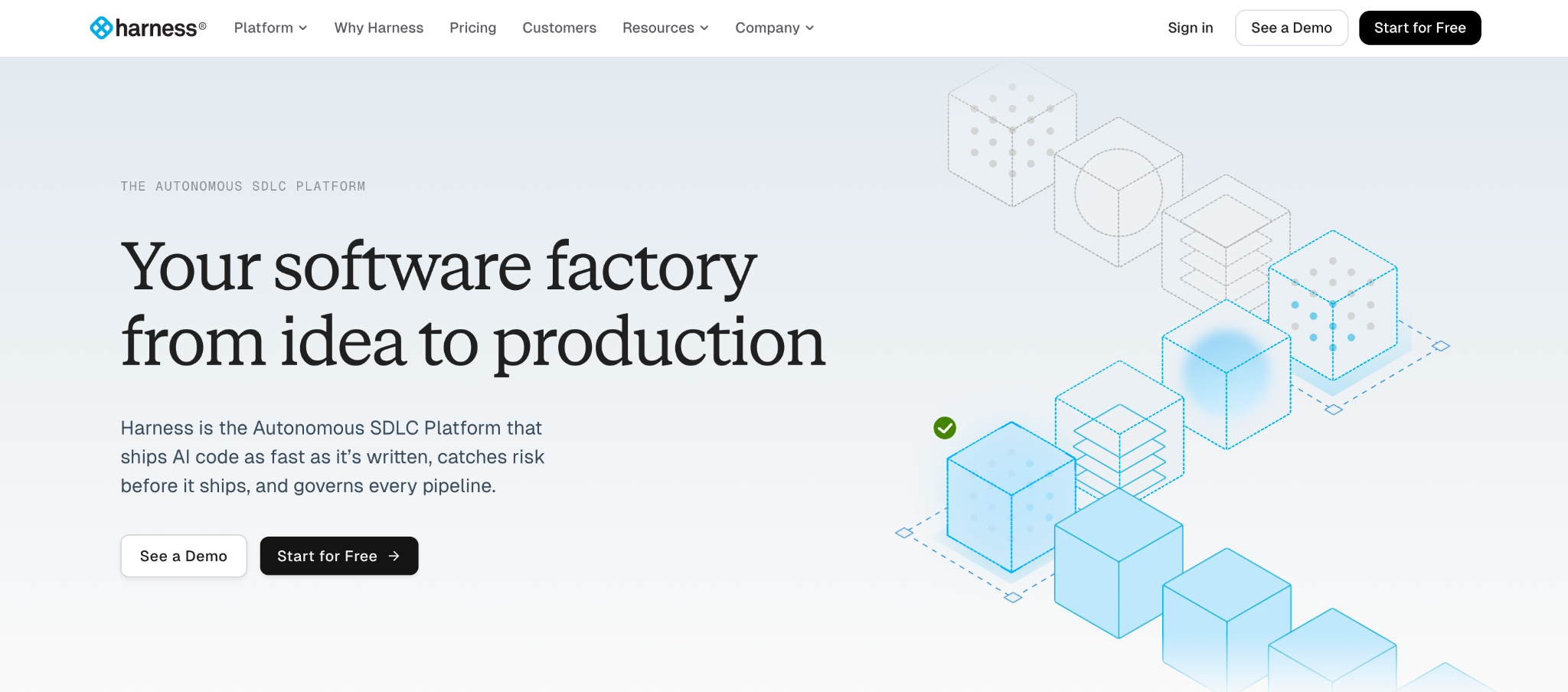
Best for: Enterprise customers already running, or planning to run, Harness's broader CI/CD platform who want feature releases governed in the same pipeline.
Split built a strong independent reputation as an experimentation platform before Harness acquired it in 2024 and folded it into the wider Harness Software Delivery Platform as feature management and experimentation, now one of several modules alongside CI/CD, infrastructure as code, and database DevOps.
Harness offers users delivery-pipeline governance and is especially beneficial if you're already standardised on Harness.
Flags, configs, and experiments share the same user segments and sit under the same role-based access control, approval workflows, and audit trail as the rest of your deployment pipeline, with automated rollback triggers tied to key metrics.
A dedicated cleanup agent also detects stale flags and opens pull requests to remove them, which is a useful level of CI/CD integration.
However, feature management and experimentation isn't sold as a standalone product with public pricing. It's one module inside a custom-quoted Enterprise plan, so if feature flags are the only thing you need, Harness is unlikely to be the right Flagsmith alternative.
Features
- Feature flags, dynamic configuration, and AI configs share the same user segments.
- A Feature Flag Cleanup Agent that detects stale flags and opens cleanup pull requests automatically.
- Experimentation with sequential testing and guardrail metrics tied to automated rollback.
- Warehouse native experimentation option, thanks to the Split acquisition.
- Governance shared with the rest of the Harness CI/CD platform, including policy-based approvals.
- Deep integrations with monitoring tools like Datadog and New Relic, plus PagerDuty and Jira.
8. Datadog Experiments
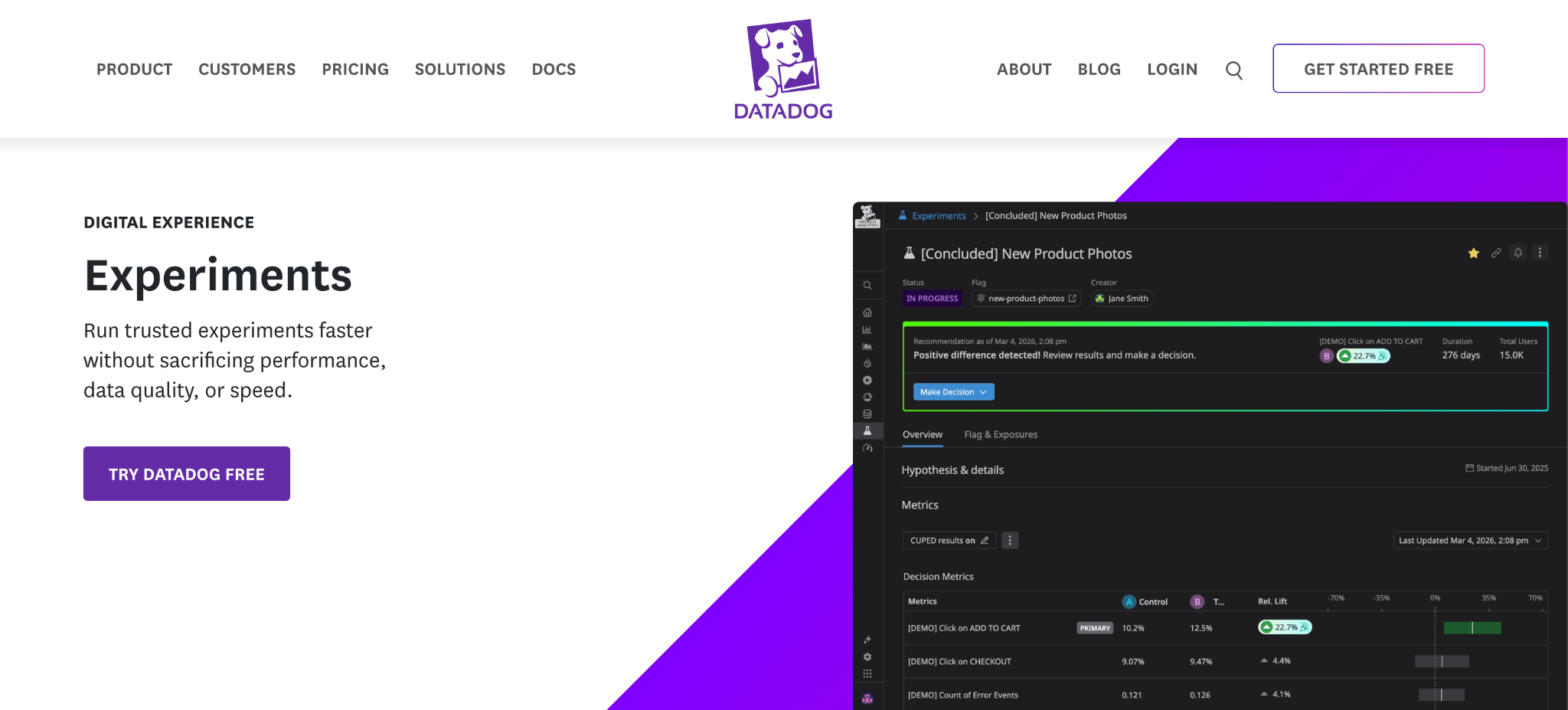
Best for: Data science-led product teams that want warehouse-native experimentation with advanced statistical rigour.
Eppo built its name on zero-copy, warehouse-native experimentation: analysis that runs directly against Snowflake, BigQuery, Redshift, or Databricks without copying data out, paired with one of the more advanced statistical engines in the category.
Eppo has rebranded following its acquisition by Datadog to Datadog Experiments.
If you want true zero-copy architecture built into every plan rather than an optional add-on, plus advanced statistical methods like CUPED++ variance reduction, sequential testing, and Bayesian analysis, built specifically for data teams that want warehouse-level rigour, choose Datadog Experiments.
Eppo doesn't publish pricing and isn't open source, so you can't inspect the code or get a budget figure without a sales conversation. There is also likely to be uncertainty during the acquisition process.
Features
- Zero-copy, warehouse-native architecture across Snowflake, BigQuery, Redshift, and Databricks.
- Advanced statistics including CUPED++ variance reduction, sequential testing, and Bayesian analysis.
- Feature flagging with automated rollouts and no-code dynamic configuration.
- Contextual bandits for personalisation use cases.
- Metric governance and a semantic layer for consistent experiment definitions.
- Integrations with other platforms including LaunchDarkly, Optimizely, Segment, and dbt.
The best Flagsmith alternatives for startups
Startups need two things most enterprise-first platforms don't prioritise: a free tier generous enough for a real production workload, and setup that doesn't require a sales call.
Flagsmith's own free plan covers unlimited feature flags, environments, and segments, with paid tiers starting at $45 a month rather than a custom quote. Here are some other options:
- Unleash. A free self-hosted tier with unlimited seats, though capped at 5,000 flags.
- PostHog. The most generous free allowance of any platform here, spanning flags, analytics, and replay together.
- GrowthBook. Unlimited flags, experiments, and traffic on its free Starter cloud tier.
Flagsmith alternatives for developers
Flagsmith is straightforward for developers, with SDKs across web, mobile, and server-side frameworks, and local evaluation for low-latency flag checks. A few other platforms stand out:
- ConfigCat. The simplest setup here, focused on doing one job well and offering unlimited seats to loop in a whole team.
- Unleash. The widest SDK coverage, with 25-plus official SDKs across multiple languages.
- PostHog. AI- and MCP-based flag management from inside an editor like Cursor or VS Code, letting a developer create and clean up flags without leaving their IDE.
Flagsmith alternatives with advanced feature flag targeting
Flagsmith's segmentation supports percentage rollouts and multi-attribute user segments, which covers most use cases. These three go further for teams with genuinely complex targeting logic.
- LaunchDarkly. A context-based targeting model that supports granular, multi-attribute user context rules at enterprise scale.
- Statsig. Attribute-, segment-, and warehouse-driven targeting on the same pipeline as its analytics.
- GrowthBook. Targeting rules that can draw directly on warehouse data for deeper experiment analysis, rather than only in-app attributes.
Flagsmith alternatives with strong enterprise security features
Flagsmith covers this ground well, with role-based access control, audit logs, and other governance and management features available from the Scale-Up tier up, plus self-hosting and private cloud deployment for enterprise customers that need data to never leave their own infrastructure.
Security-conscious buyers evaluating Flagsmith alternatives could consider:
- LaunchDarkly. SSO, SCIM provisioning, and custom roles, though all gated behind a custom-quoted Enterprise plan.
- Unleash. SAML and OIDC single sign-on, audit logs with two-year retention, and US/EU data residency options.
- Harness. Governance shared with the rest of the Harness CI/CD platform, including policy-based approvals and mandatory review.
Conclusion
When it comes to selecting a feature flag and experimentation platform like Flagsmith, choose one that matches your needs.
If what you actually want is an open-source, transparently priced platform with genuine self-hosting and no vendor lock-in, Flagsmith is the right choice.
Sign up for a free account and see how it compares for yourself.
Flagsmith alternatives FAQs
What feature flag platforms are similar to Flagsmith?
Unleash and GrowthBook are both open source with self-hosting options, similar to Flagsmith's own deployment model. PostHog bundles flags with a broader open-source product, though its focus leans more towards analytics than flag management on its own. LaunchDarkly, Statsig, Harness, ConfigCat, and Eppo all solve the same core problem, flagging and progressive delivery, with more specialised or proprietary approaches.
Is there a free Flagsmith alternative?
Unleash, GrowthBook, and PostHog all offer free tiers: Unleash and GrowthBook as free self-hosted options, and PostHog as a free cloud allowance across flags, analytics, and replay. Flagsmith's own free plan covers unlimited flags, environments, and segments at no cost.
What's the most affordable Flagsmith alternative?
ConfigCat is the most predictable option for teams with a lot of users but a modest number of flags, since every tier includes unlimited seats at a flat price. For a self-hosted option with no cost ceiling at all, Unleash and GrowthBook's free self-hosted tiers are worth considering.



























OpenTelemetry, without the vendor lock-in: Introducing full observability for Open Source and Self-Hosted Flagsmith customers