How to Build a Product Experimentation Framework That Works

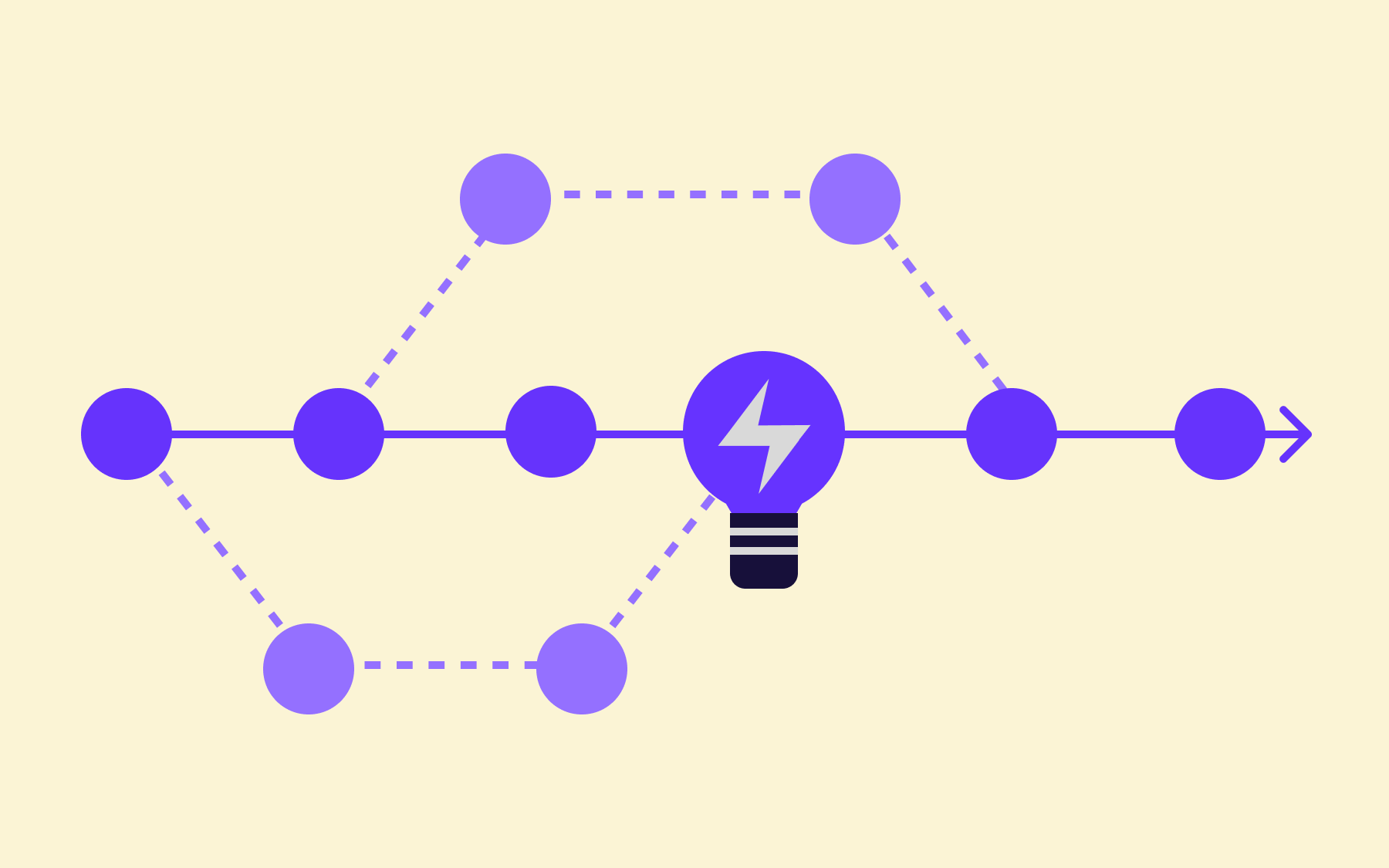
With an effective product experimentation framework, your shipping decisions stop being a guessing game and become a repeatable process, with every meaningful change tested against a clear hypothesis before it reaches your whole user base.
Without one, product teams often ship what feels right, then scramble to explain why a metric moved unexpectedly.
This guide covers what a product experimentation framework is, the core steps of building one, how to scale it as your team runs more experiments, choosing the right approach for your team, and how feature flags fit into the framework once you're testing features and backend logic, not just marketing pages.
What is a product experimentation framework?
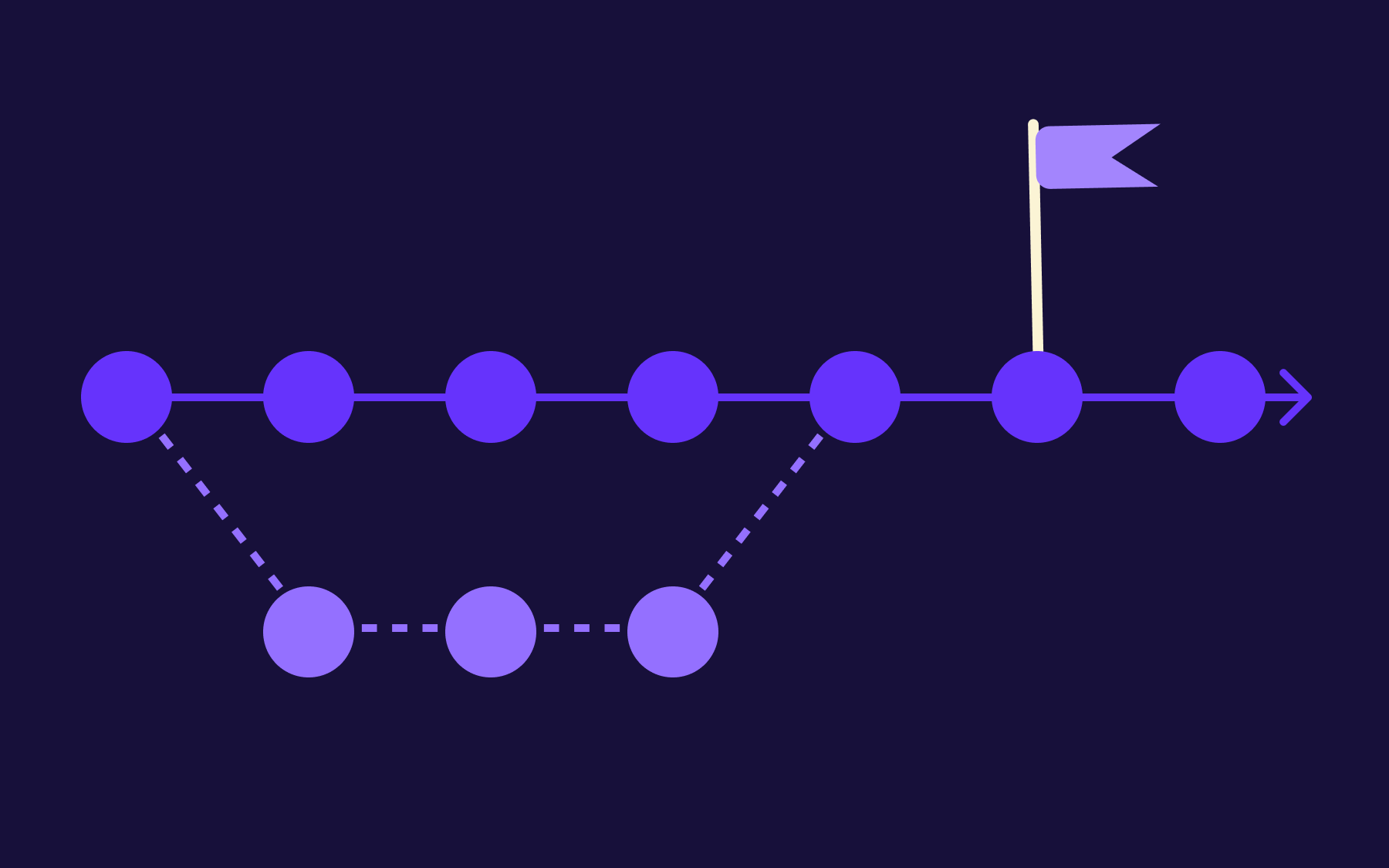
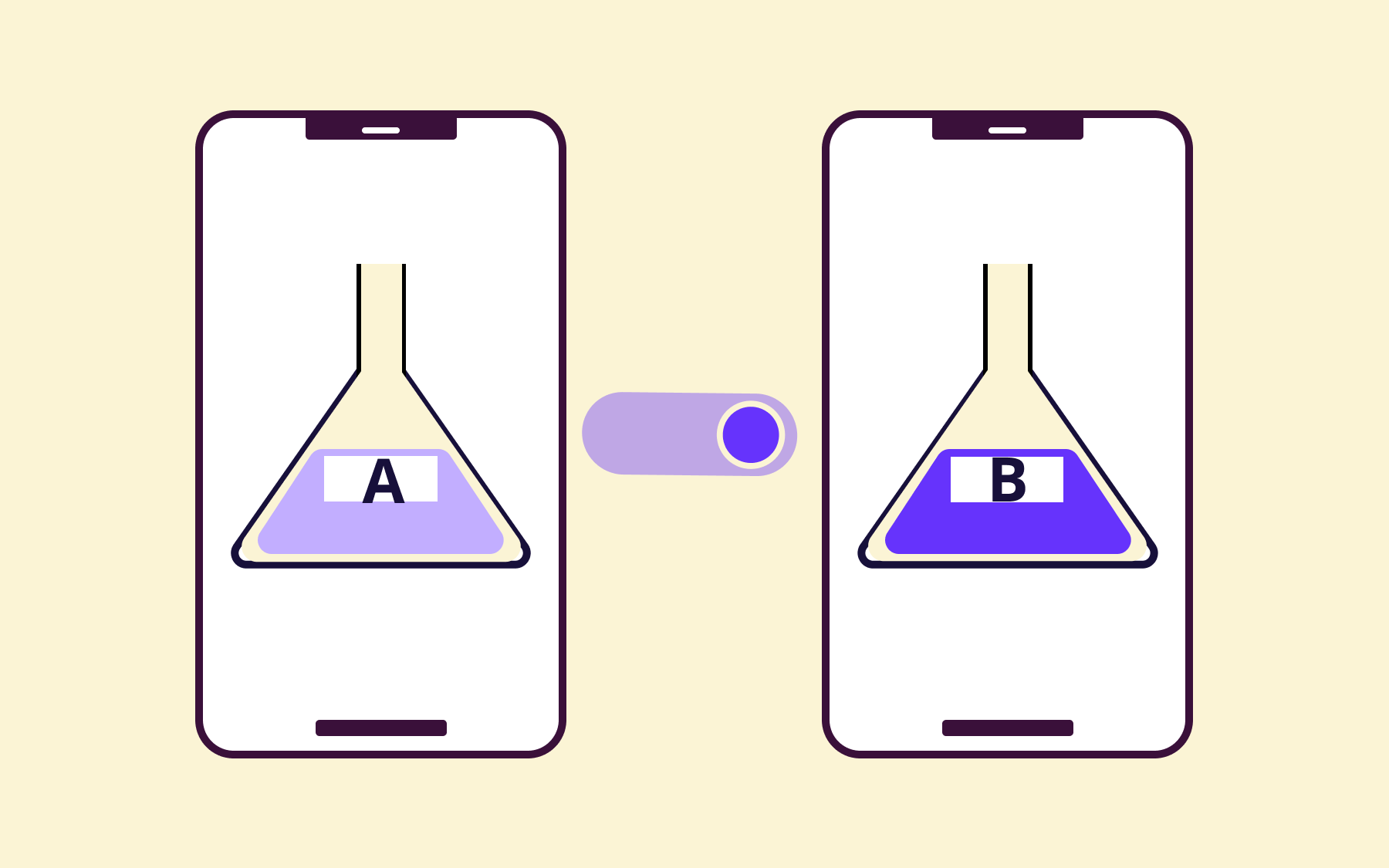
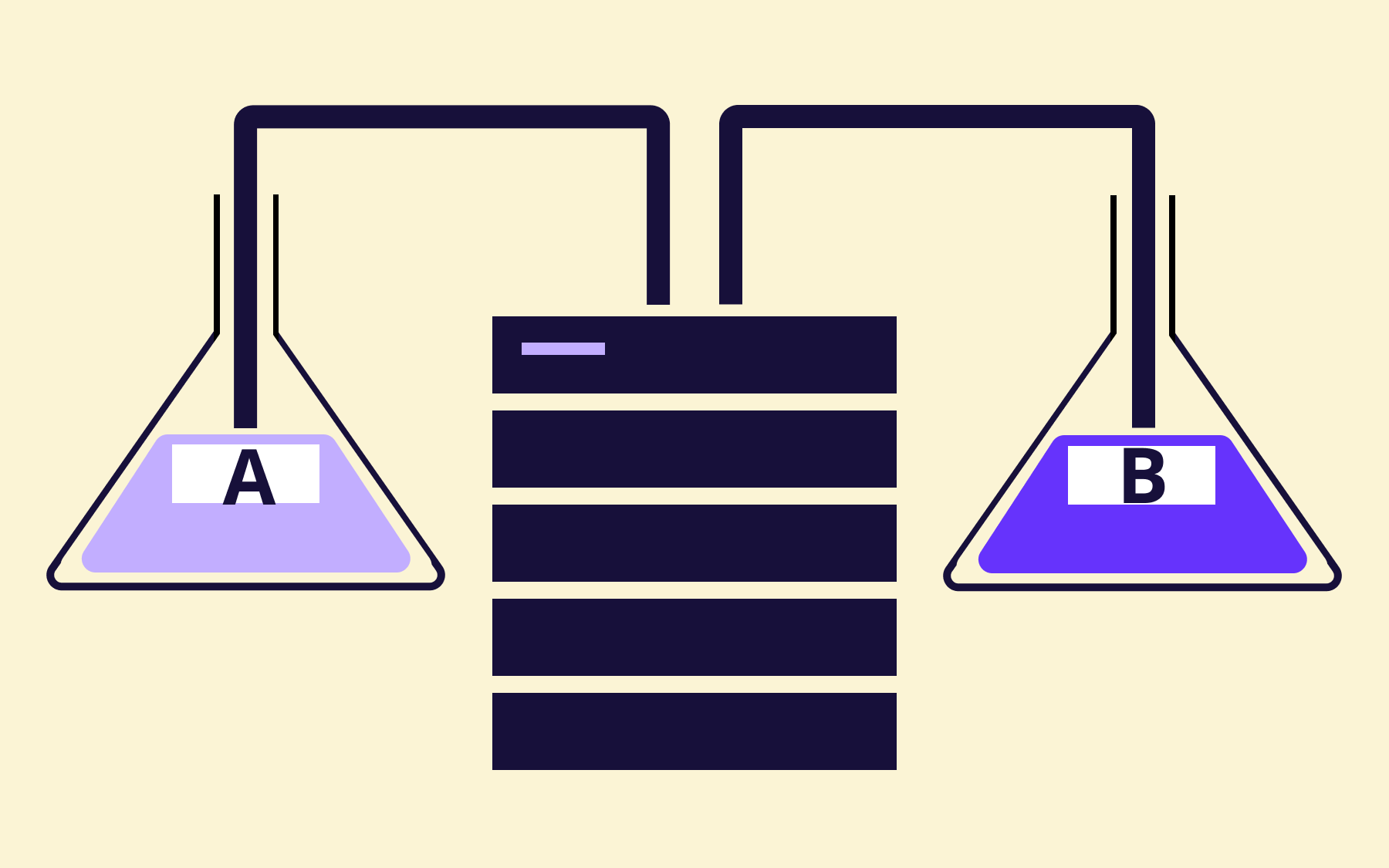
A product experimentation framework is a structured, repeatable process for testing a change to your product against a clear hypothesis, then measuring whether it moved the metric you set out to impact.
Instead of shipping a redesign, a new onboarding flow, or a pricing change because it feels right, you test it against a control group first and let the experiment results decide—at least in its simplest form
Every product experimentation framework rests on the same building blocks:
- A testable hypothesis
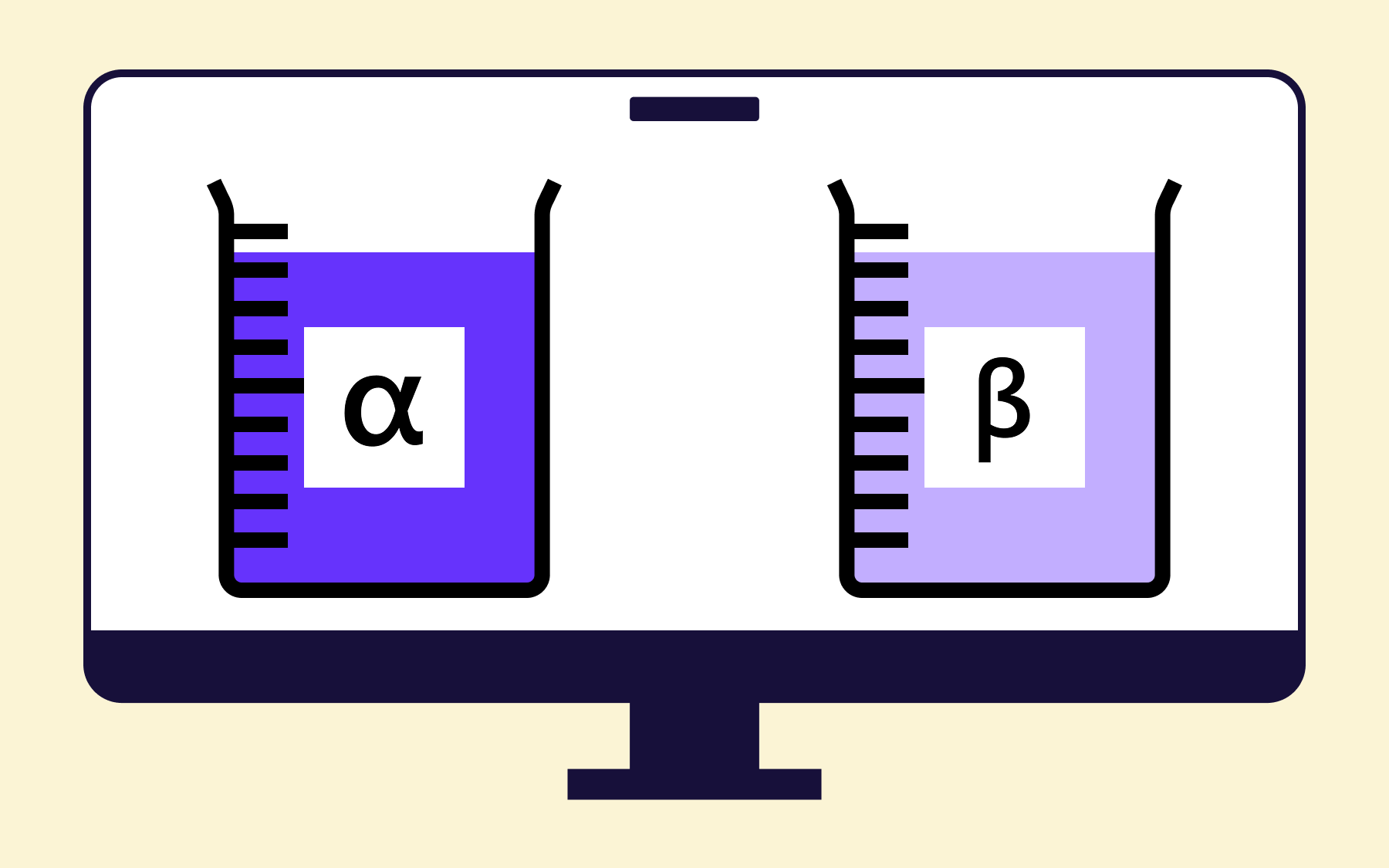
- Control and treatment groups
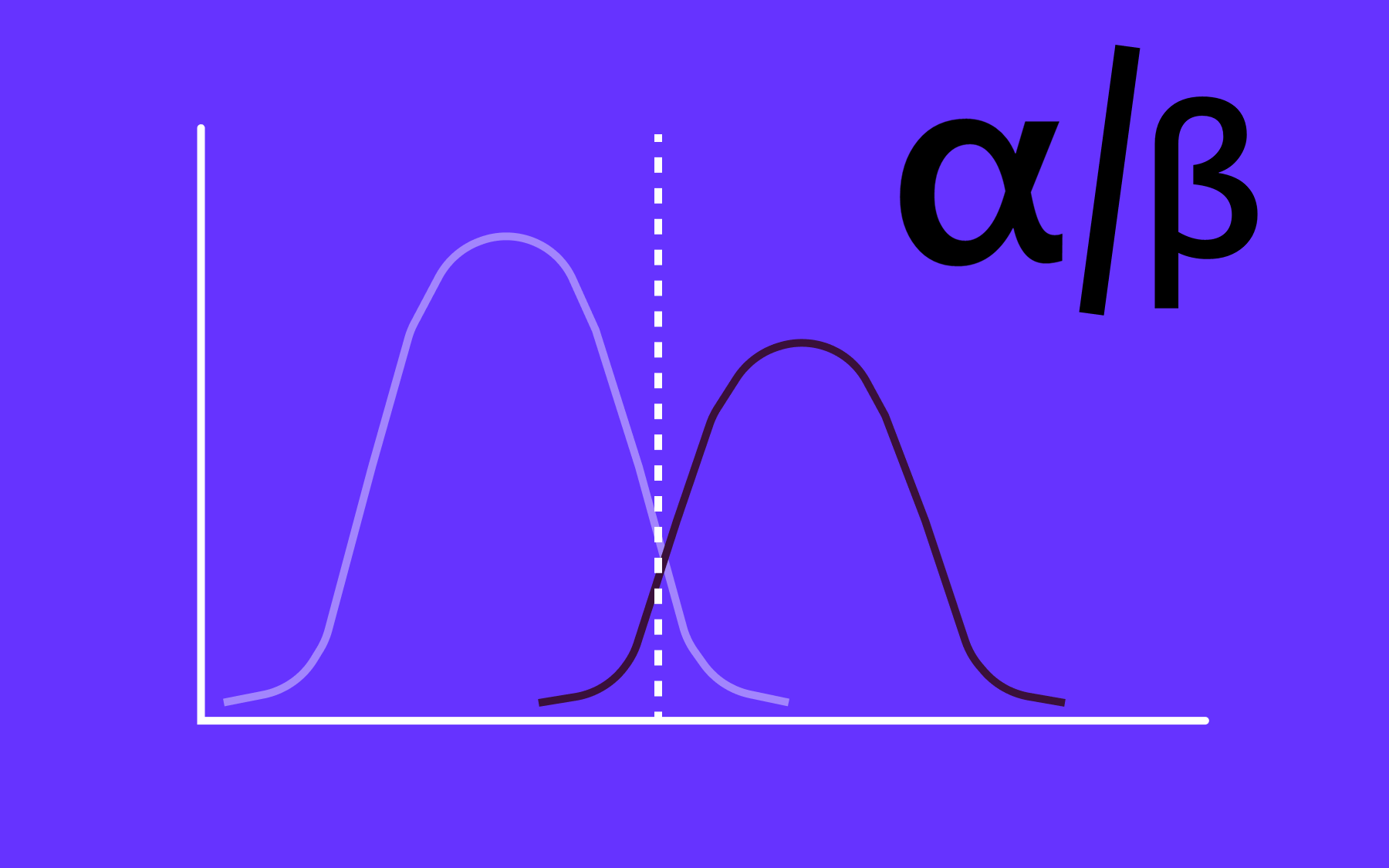
- A sample size large enough to reach statistically significant results
- A small set of relevant metrics that tell you whether the change actually worked
Get these right, and the rest of the framework becomes process: how you prioritise ideas, run experiments, and act on what you learn from them.
As a result, you get continuous improvement that, crucially, you can explain.
When a product experiment succeeds, you know exactly which change moved the metric that matters. When it fails, you've still learned something concrete about user behaviour, rather than shipping the same guess again under a different name.
Done right, product experimentation becomes a habit, as it compounds positive results while offering learning opportunities to your team.
Why a structured framework beats ad hoc testing
Ad hoc testing without a framework tends to fail in the same few ways:
- Product teams run product experiments that don't tie back to a clear goal, so even a winning result doesn't tell anyone what to do next
- Sample sizes are too small to produce statistically significant results, so nobody trusts the outcome enough to act on it
- An experiment gets cut short the moment it looks promising, which all but guarantees a false positive.
If this happens a few times, the risk is that your organisation stops trusting experimentation as a way to make informed decisions, and goes back to shipping based on the loudest opinion in the room.
In reality, however, every skipped experiment is a missed chance to inform future experiments and uncover valuable insights about user satisfaction and what actually works for your target audience.
You can fix this with a structured product experimentation framework, applying the same discipline to every test: a defined goal tied to your business strategy, a testable hypothesis, agreed metrics, and a sample size calculated in advance rather than eyeballed once the data starts coming in.
With that discipline in place, you get data-driven decision-making instead of data-adjacent guessing.
Here's how to put it into practice, step by step.
The core steps of a product experimentation framework
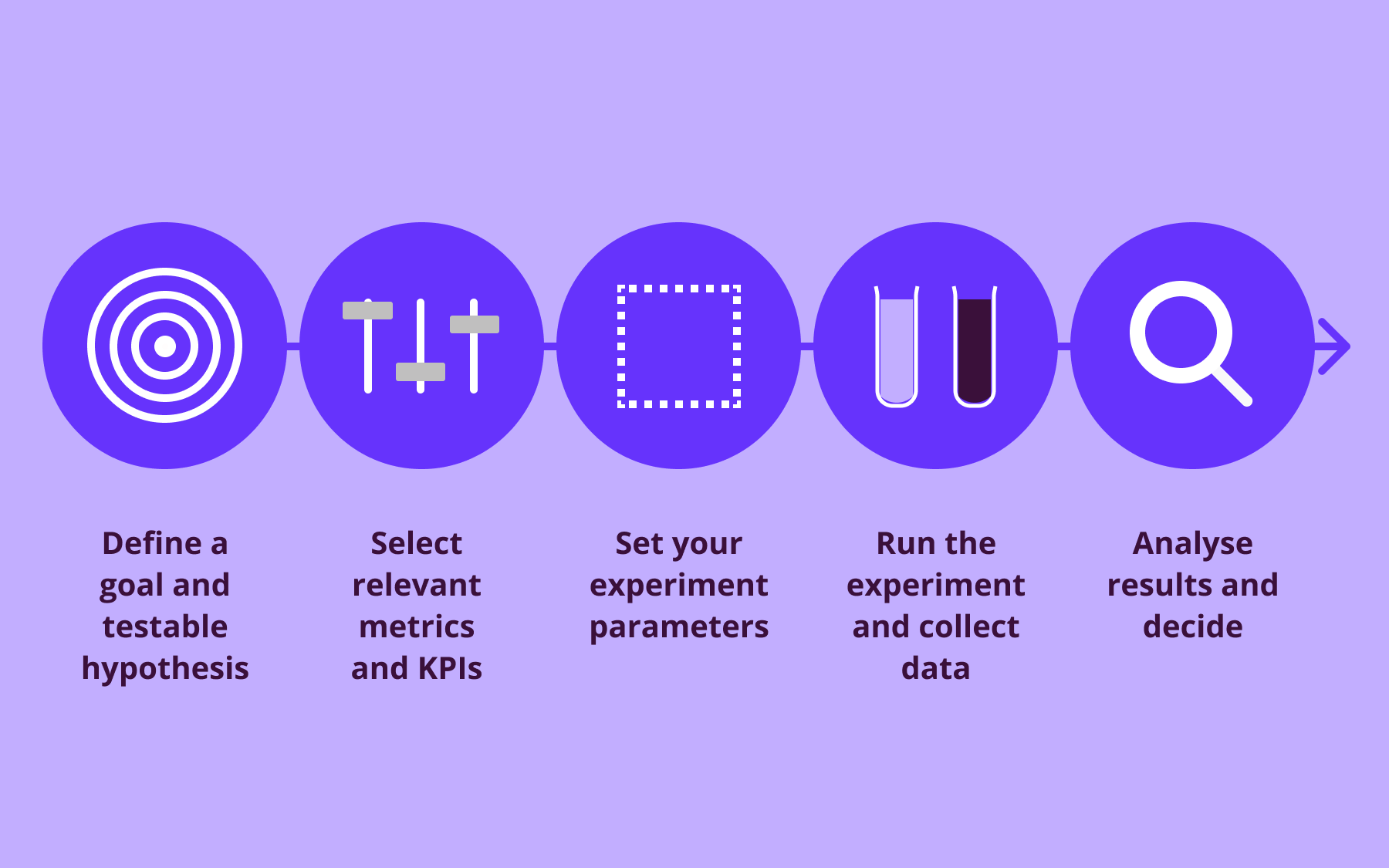
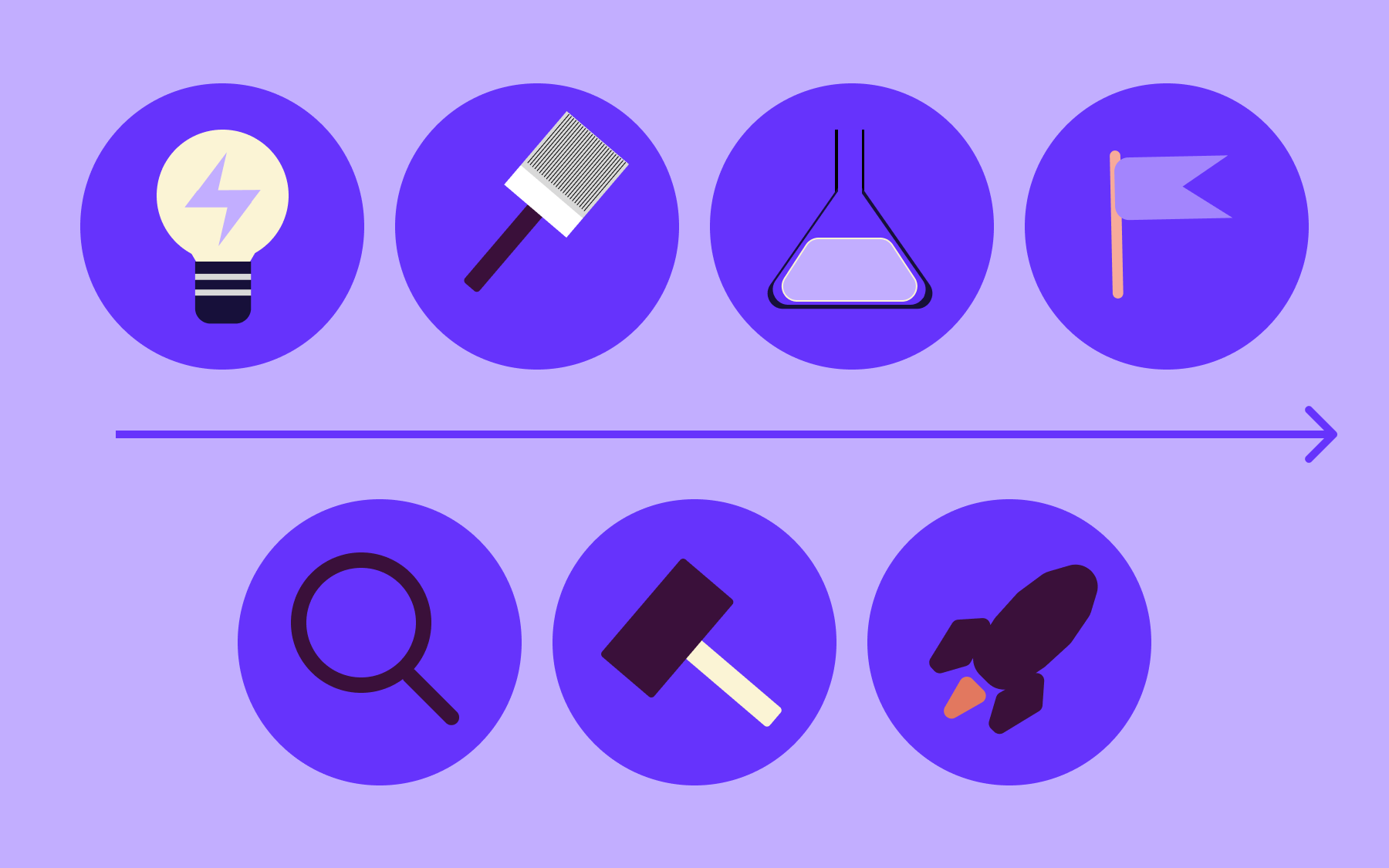
Every product experimentation framework, regardless of the tools behind it, follows the same underlying steps, whether you're testing a single change or multiple variables at once through multivariate testing.
- Define a goal and build a testable hypothesis
Start with the goal, not the idea. Decide which metric you're trying to affect—whether that's activation rate, user retention, conversion rate, or something more specific to your product—before you decide what to test. A goal without a metric attached is just an opinion.
From there, build one of your testable hypotheses, for example:
"We believe reducing our onboarding flow from five steps to three will increase completion rate, because users are dropping off before they see value."
With a hypothesis like this, you have something to prove or disprove, and you're forced to state your reasoning up front, which makes it far easier to learn from a result you didn't expect.
If your hypothesis is vague, your result will be too. State what you expect to happen and why, or you won't know what to do differently the next time you run experiments.
- Select relevant metrics and KPIs
Pick one primary metric your product experiment is designed to impact, and one or two secondary metrics to catch effects you didn't anticipate.
Trying to track everything is one of the most common mistakes in experiment design: when every metric is a candidate for success, teams fall into the trap of cherry-picking whichever one moved in the right direction after the test.
Good candidates for key performance indicators include conversion rate, user retention, customer satisfaction, and customer effort score—depending on what your experiment targets.
Whichever primary metric you choose, select relevant metrics that genuinely reflect your hypothesis, rather than a vanity number that looks good in a slide.
Secondary metrics matter too. If your primary metric improves but a secondary one, like customer effort score, drops, that's still a valuable insight worth acting on. Qualitative data from user research and direct user feedback, such as a change in support ticket volume, can support the same hypothesis and add context numbers alone won't give you.
- Set your experiment parameters
Before you launch anything, decide your experiment parameters: how many users need to see each variant, how long the test needs to run, and how you'll split traffic between your control group and treatment group.
Sample size is what determines statistical significance. Too few users, and you won't reach statistically significant results no matter how large the effect actually is. Too short a duration, and you'll miss variation caused by day-of-week effects or a slow news cycle in how users interact with your product.
A simple sample size calculator will do the maths, based on your current baseline, the minimum effect size you'd consider meaningful, and how many users pass through the relevant part of your product each week.
- Run the experiment and collect data
Once your parameters are set, deploy the change to the assigned user segments, track user interactions, and let the test run for its full planned duration.
Resist the temptation to check results daily and stop early the moment they look good. That habit is one of the fastest ways to collect data that looks statistically significant but isn't.
- Analyse results and decide
Once the test completes, check your success metrics for statistically significant results, then analyse how users engage differently before reviewing secondary metrics for anything unexpected.
If the hypothesis holds, roll the change out to everyone. If it doesn't, it's still a successful product experiment: you've ruled something out, and you can use it to inform future experiments rather than run the same idea again next quarter.
If you don't have a clear winner or loser, don't be discouraged. According to Optimizely, 60% of tests don't produce a clear winner or loser. Instead, use this as an opportunity to improve your experimentation.
How to build a scalable product experimentation framework
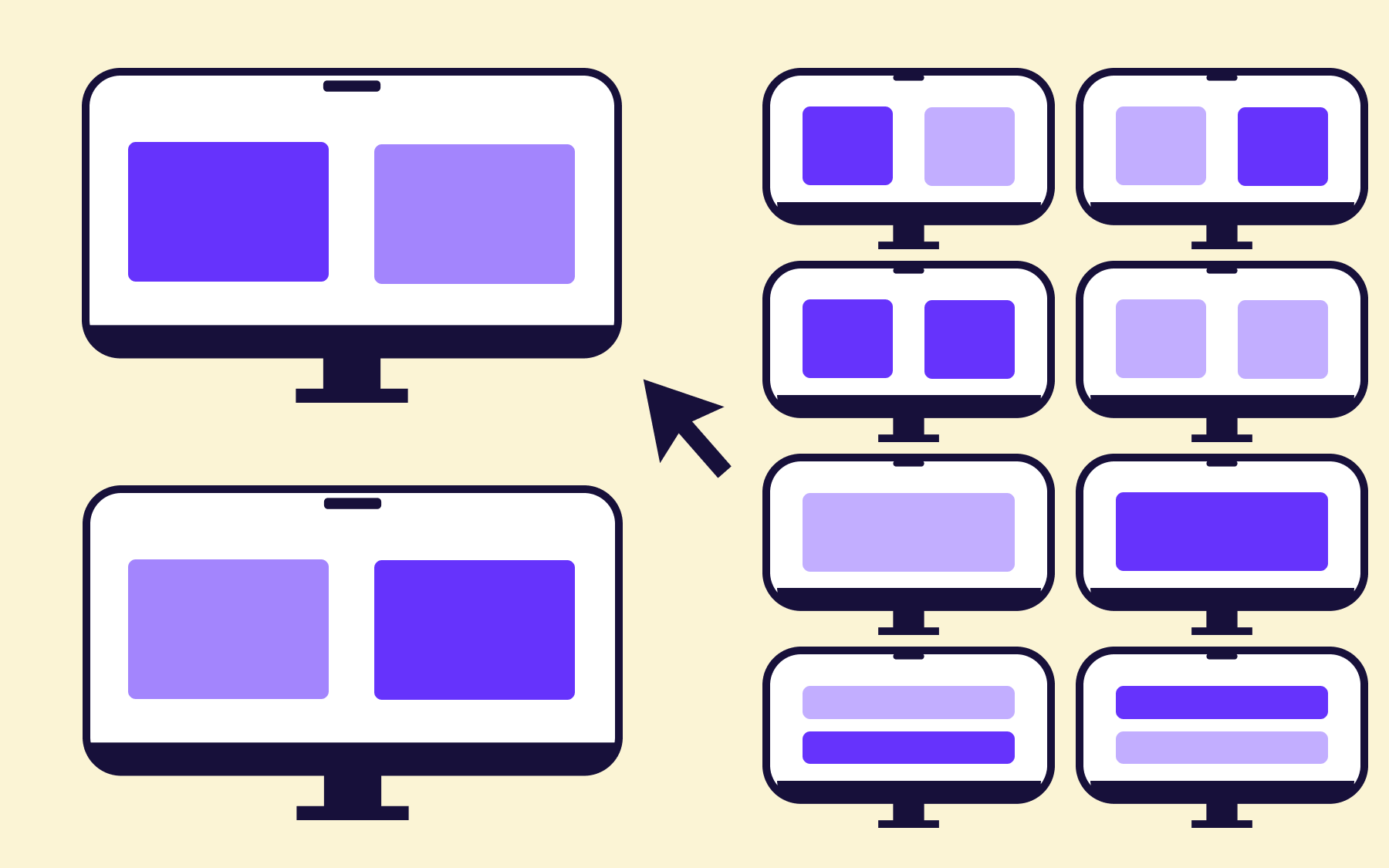
Running one experiment at a time is straightforward. Running ten concurrently, across several product teams, is where most frameworks start to break down, usually in one of three ways.
- Overlap. If two teams run experiments that touch the same user journeys at the same time, you can't cleanly attribute a change in your key metrics to either one. The result attributed to your pricing test might actually be the checkout redesign running alongside it. Standardising which parts of the product can be tested concurrently avoids this before it corrupts your data.
- Prioritisation. As more people want to run experiments, you need a consistent way to decide what gets tested first, based on expected impact and confidence in the hypothesis. A lightweight intake brief covering the goal, the hypothesis, and the relevant metrics keeps this fair.
- Memory. Without a shared record of past experiments, teams re-run ideas that already failed, or fail to build on ones that already worked. A simple, searchable log of past hypotheses, experiment designs, primary metrics, and outcomes turns every test into an asset for further experimentation.
You need to decide, once, how experiments get proposed, run, and remembered, then hold every team to the same standard.
How to choose a product experimentation framework for your team
Not every team needs the same setup, and it's worth being honest about the pros and cons before committing to one.
An off-the-shelf CRO or analytics platform is the fastest way to start testing web pages, headlines, layouts, calls to action, or entire site structures. Most are built for marketing and growth teams, with a visual editor that doesn't need engineering time for every change.
Their limitation is scope: built to intercept what renders in a browser, they rarely reach backend logic or anything behind your API.
Build a fully custom, in-house system, and you get complete control over data warehousing, statistical methods, and governance—but it takes real engineering investment.
Most teams underestimate how much of that goes into the unglamorous parts: bucketing users consistently, instrumenting events reliably, and keeping the statistics engine trustworthy as traffic scales.
A feature-flag-based approach sits between the two. It demands more of your engineering team than a visual editor does, but it reaches anywhere your flags do, including backend and server-side logic that a marketing tool can't touch—but it's also less effective if you're testing marketing assets as well.
Before choosing, work out what you need to test, whether that's customer-facing pages, in-product features, backend behaviour, or some mix of the three.
Then, weigh how much engineering time you can dedicate to instrumentation, and what governance your organisation requires around who can start or stop an experiment in production.
Feature flags as the backbone of a product experimentation framework
A framework is still just a process until something delivers each variant and lets you turn off a losing one instantly. For engineering-led product teams, that something is usually a feature flag.
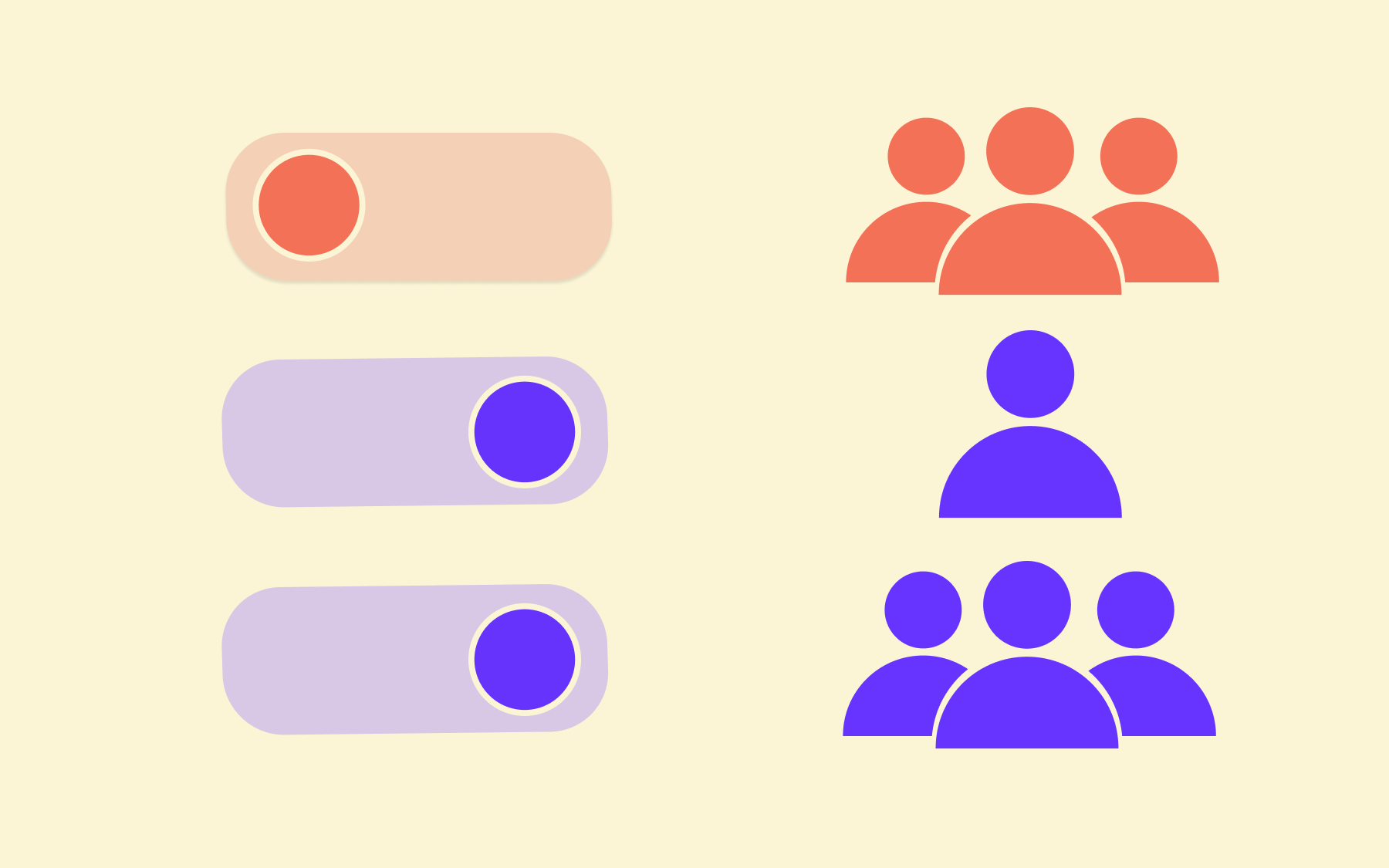
With multivariate flags, you can serve several weighted variants of one value from a single flag, rather than a plain on/off toggle. Instead of writing custom logic to split traffic yourself, you define the variants and their percentage split once, and your application reads back whichever value a given user should see.
Flagsmith buckets these variants per identity, so the same user reliably sees the same variant for the life of the test, which is as valuable for a product experiment as picking the right sample size.
Consider a checkout flow you want to test on the backend, changing the order in which a payment provider is called. A visual testing tool has no way to reach that logic, since it only affects code your server executes. You can use a multivariate flag to serve either version to a percentage of identified users instead, then measure the effect on conversion rate with your existing analytics setup, without engineering having to build any traffic-splitting logic of its own.
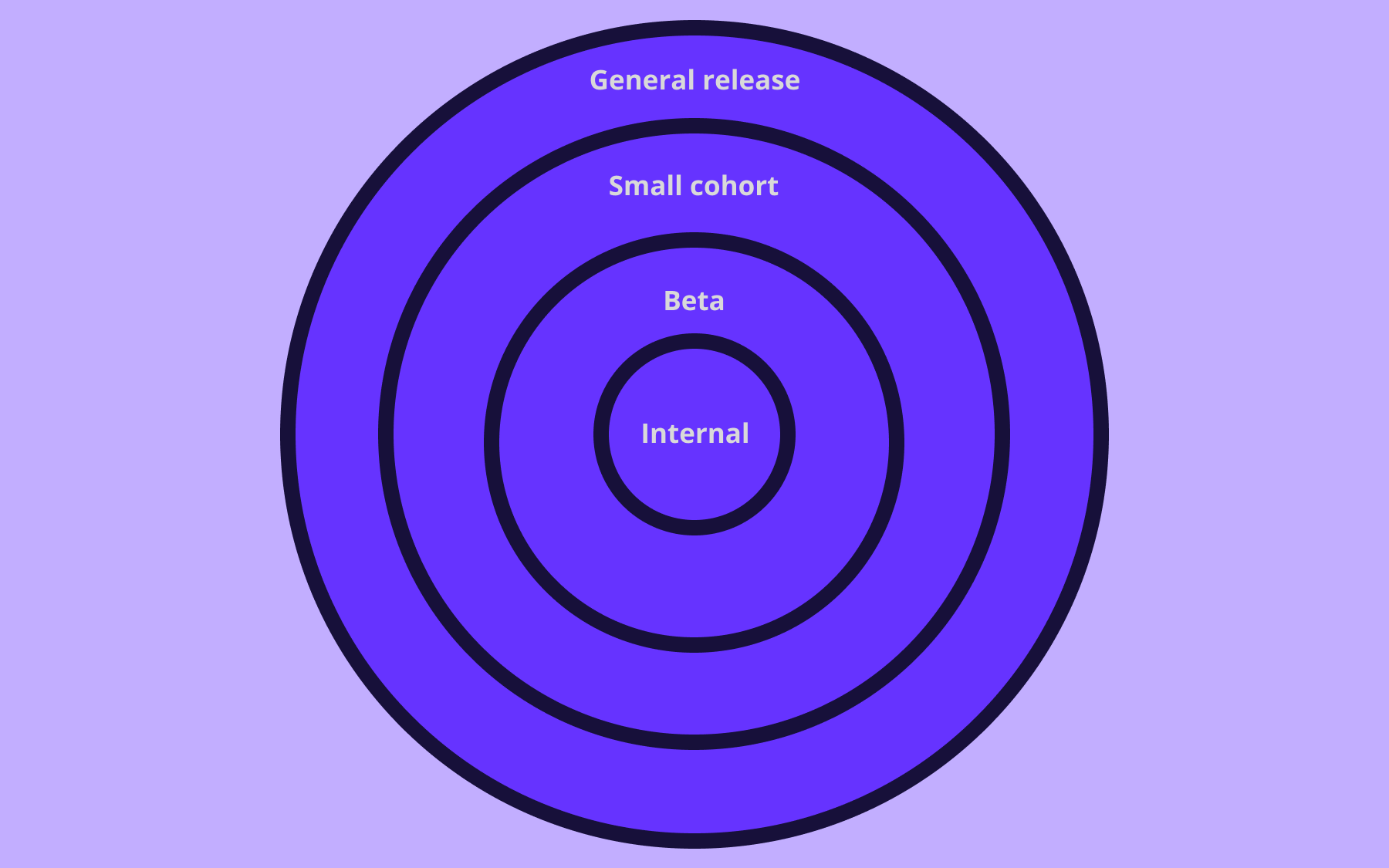
Flagsmith's own Experimentation feature, a managed data warehouse alongside a Bayesian statistics engine that reports lift, credible intervals, and win probability—is currently in beta.
This practical setup pairs multivariate flags with an analytics platform you already use, such as Amplitude or Mixpanel, to collect data and calculate significance.
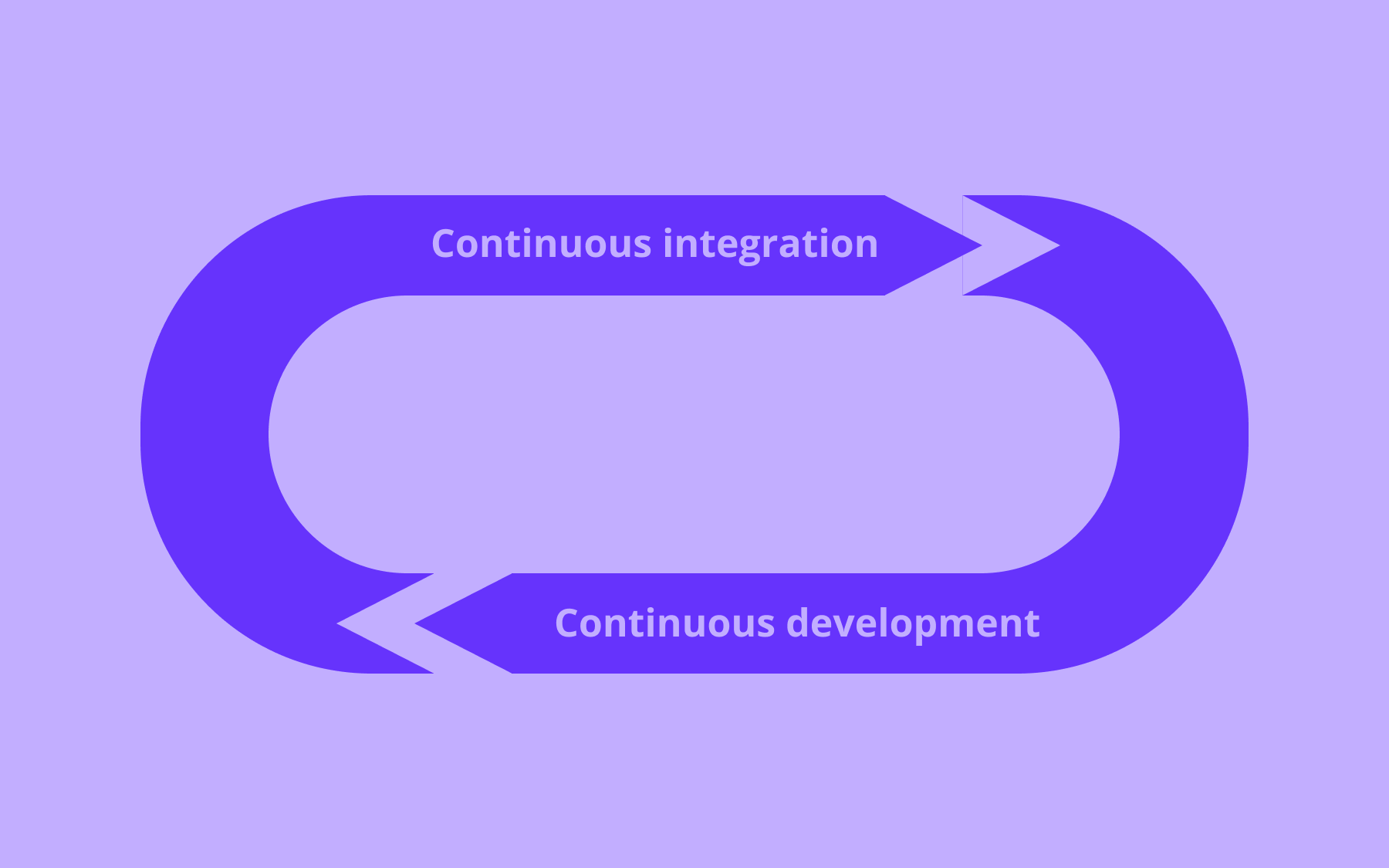
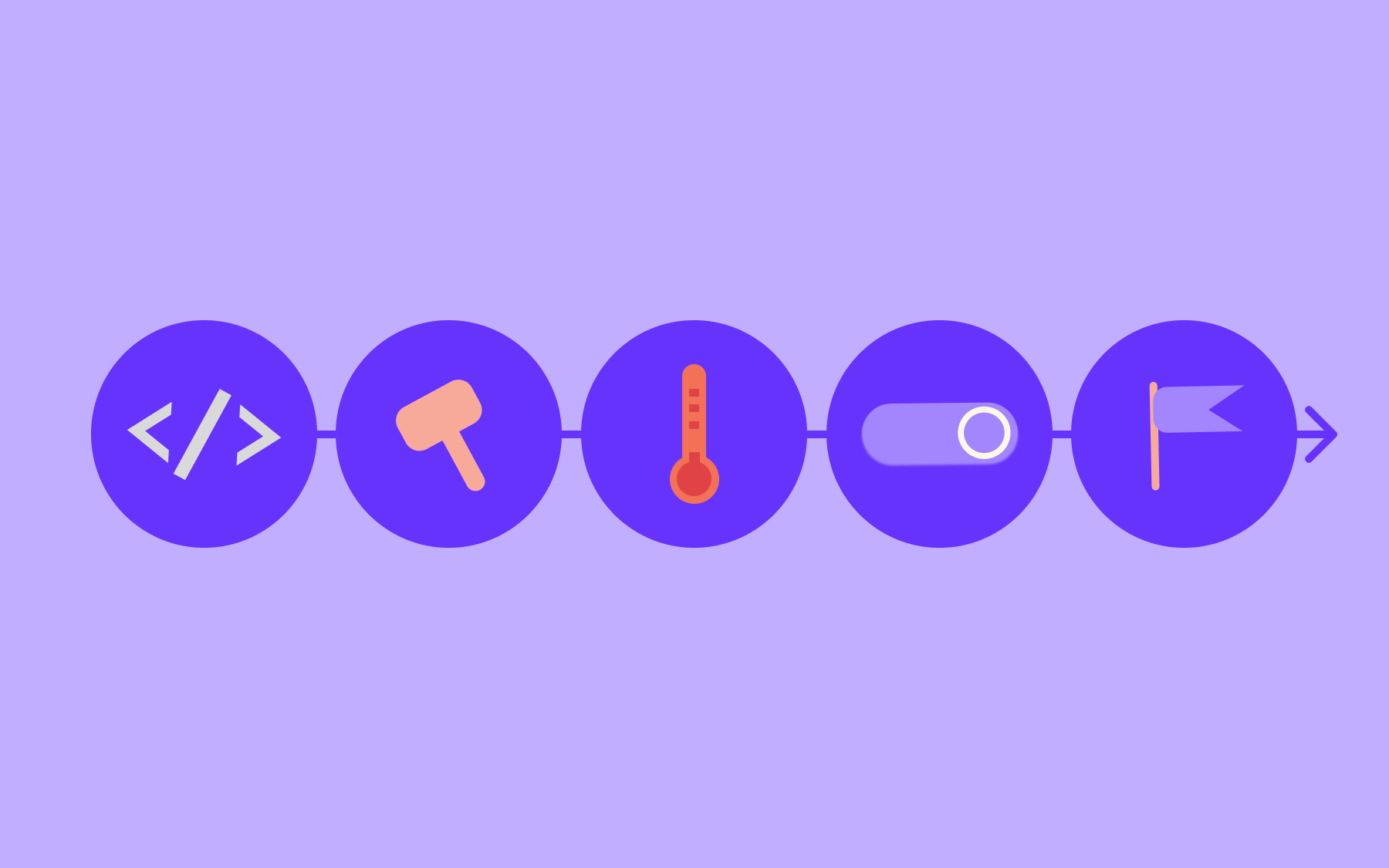
With Flagsmith, you can embed experimentation into your software development lifecycle so that testing becomes a natural part of your release window. Use feature flags to toggle features on and off, or expose them to certain users, so you can test engagement and performance before a full release.
In the world of AI development, this is even more powerful, as it removes some of the bottlenecks that have been created in deployment by the acceleration in code creation.
You can see the impact of AI on code development at Anthropic:
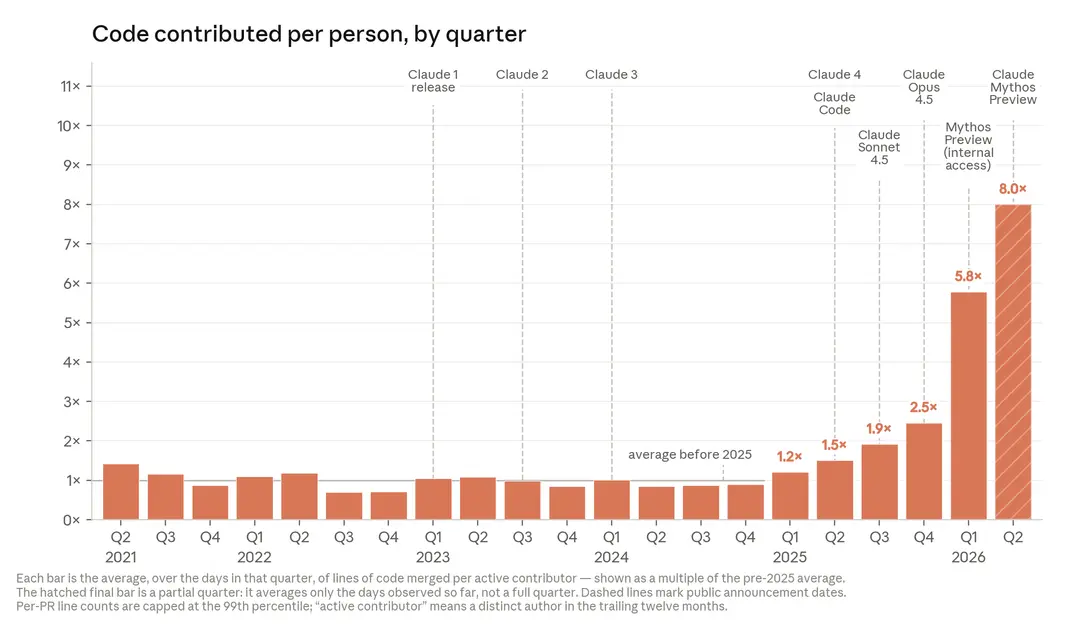
Read our ebook on how feature flags are a safety net for AI development for more information.
Though designed for any user, that combination is a code-first approach, better suited to engineering and product teams instrumenting an in-product experience than to a marketing team testing landing page copy with a visual editor.
However, it can go places that most visual CRO tools can't reach, e.g., backend logic, pricing rules, or anything server-side.
For regulated teams, the same underlying platform offers an audit log of every flag change, role-based access control over who can modify production, change requests that gate production edits behind approval, and the option to self-host the whole platform within your own infrastructure, so governance doesn't depend on trusting a third-party script embedded in your product.
Conclusion
A product experimentation framework turns a good idea into evidence: a clear goal, a testable hypothesis, the right metrics, and a process disciplined enough to trust the result.
Whichever approach fits your team—a visual CRO tool, a custom build, or feature flags wrapping your own analytics—the fundamentals stay the same: define what you're testing, measure it properly, act on what you learn, and repeat, so the desired outcomes you chase actually reflect a better customer experience rather than a guess about it.
If your team is testing features or backend logic a marketing tool can't reach, sign up for a free Flagsmith account and set up your first multivariate flag to see how it fits into your existing experimentation efforts.
Product experimentation framework FAQs
What's the best product experimentation framework for a SaaS growth team?
There isn't a single best product experimentation framework for every SaaS growth team, since the right choice depends on what you're testing.
A growth team that is mostly optimising marketing pages and onboarding screens will get more value from a visual CRO platform built for that job. A team experimenting with pricing logic, in-app features, or backend behaviour will get more mileage from a feature-flag-based framework that reaches beyond what a visual editor can touch.
How many product experiments should you run at once?
There's no fixed number, but the practical limit is how many experiments you can run without them overlapping in the same user journeys. Two tests that touch the same flow at the same time make it hard to know which change caused a shift in your key metrics.
Most teams find that tracking active experiments against the parts of the product they touch, and standardising when tests can run concurrently, is more beneficial than any specific cap on total experiments.
What's the difference between a product experimentation framework and an A/B testing tool?
A product experimentation framework is the whole process: setting a goal, building a hypothesis, choosing metrics, and deciding what to do with a result.
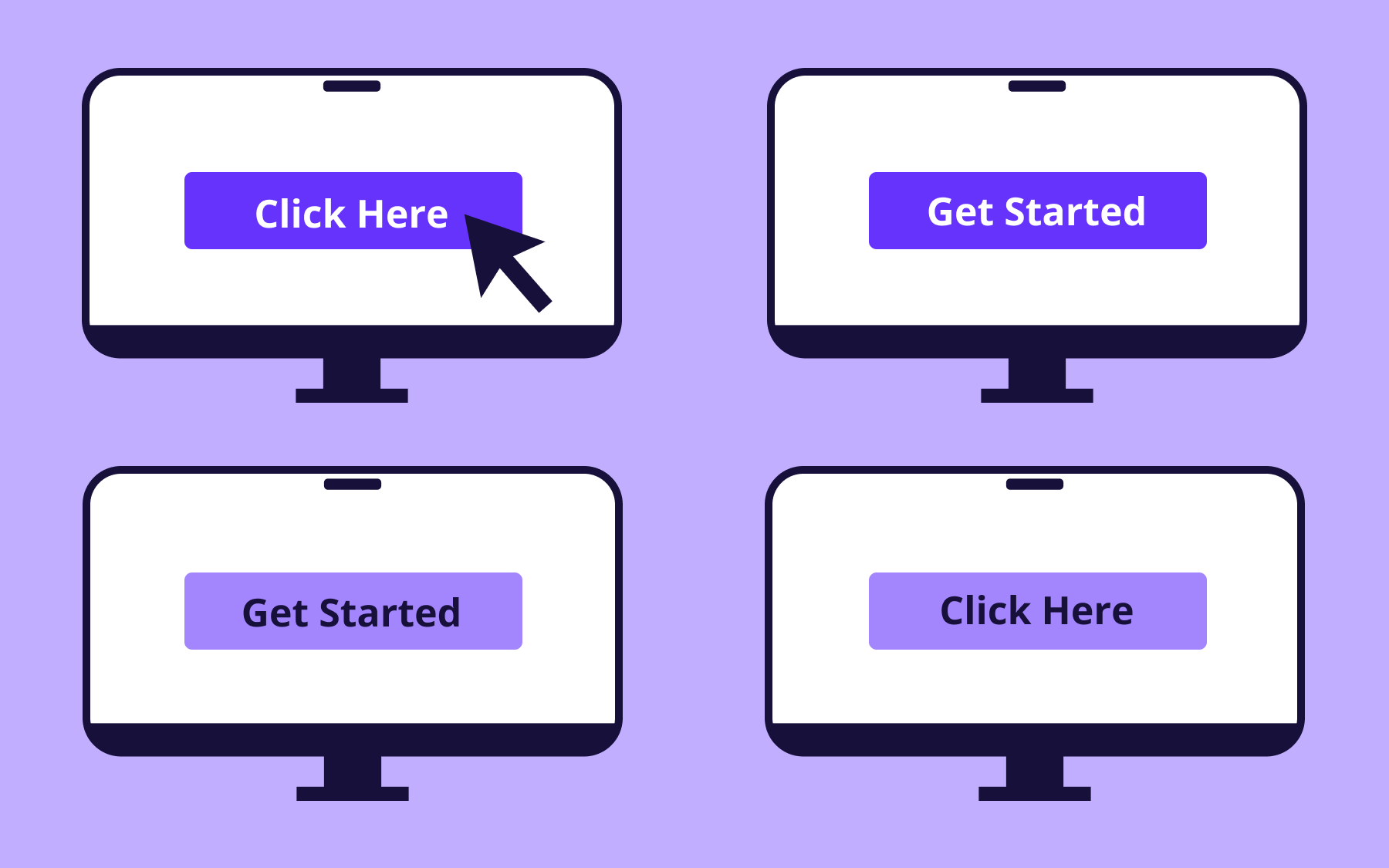
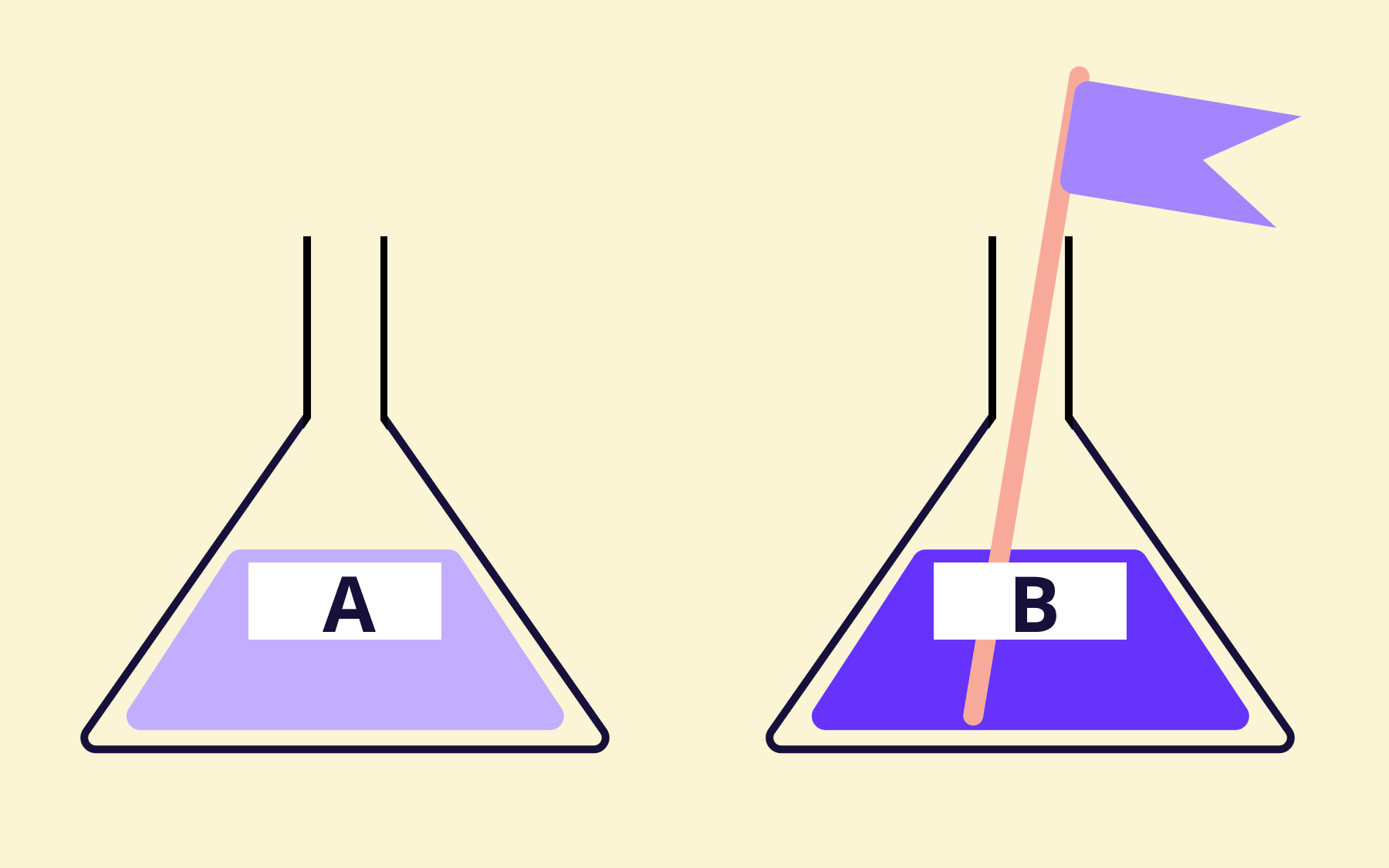
An A/B testing tool is one piece of that process, the software that splits traffic between a control group and a treatment group and reports back what happened.
You can run A/B tests without a framework around them, but without one, you'll struggle to explain why you ran the test in the first place, or what to do with the answer once you have it.





















OpenTelemetry, without the vendor lock-in: Introducing full observability for Open Source and Self-Hosted Flagsmith customers