A/B Testing in Product Management: A Practical Guide

A/B testing in product management usually follows the same steps: run the test, wait for significance, ship the winner, and then act on the result. Do you need to make a change to your product, or is it time for a different experiment?
That last step is often the most challenging for product management teams: the mechanics of turning a result into a shipped decision quickly and efficiently, ideally without another deploy, waiting for the next release window, or begging engineering for a spot in the next sprint.
This comprehensive guide covers what A/B testing in product management actually is, how the process works, the common terms you will encounter in stand-ups, the pitfalls that sink otherwise well-designed tests, and the solutions worth considering.
What is A/B testing in product management?
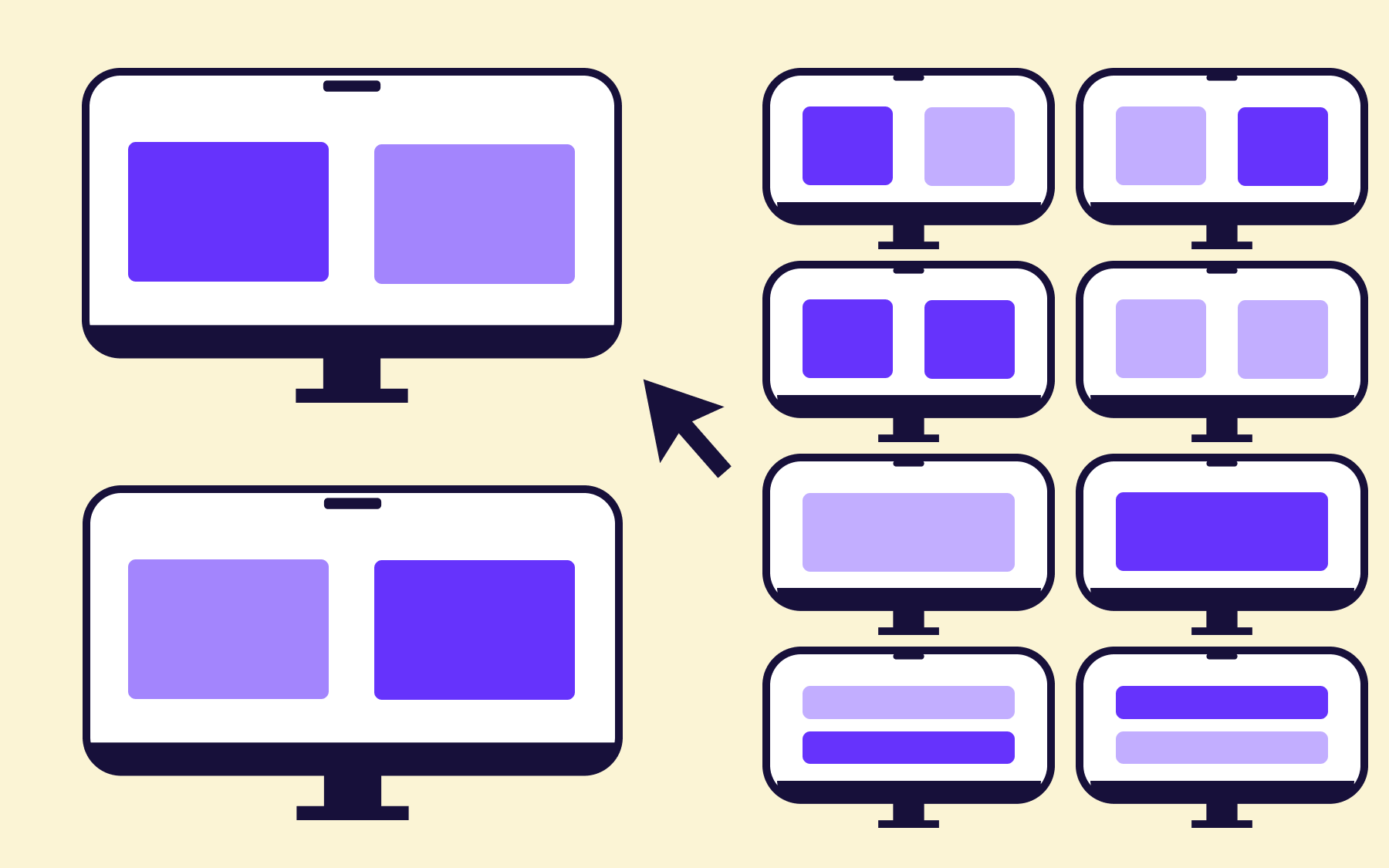
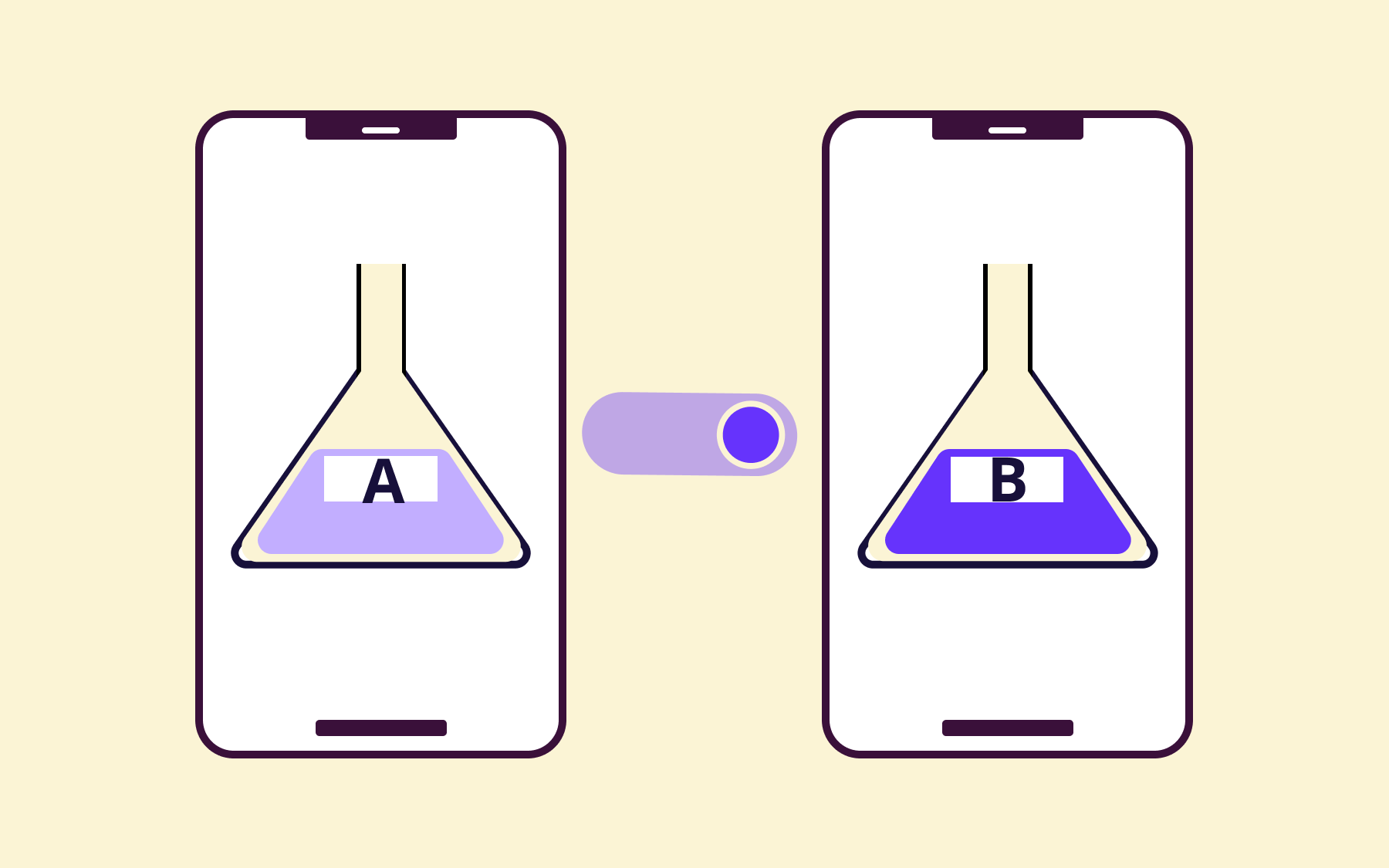
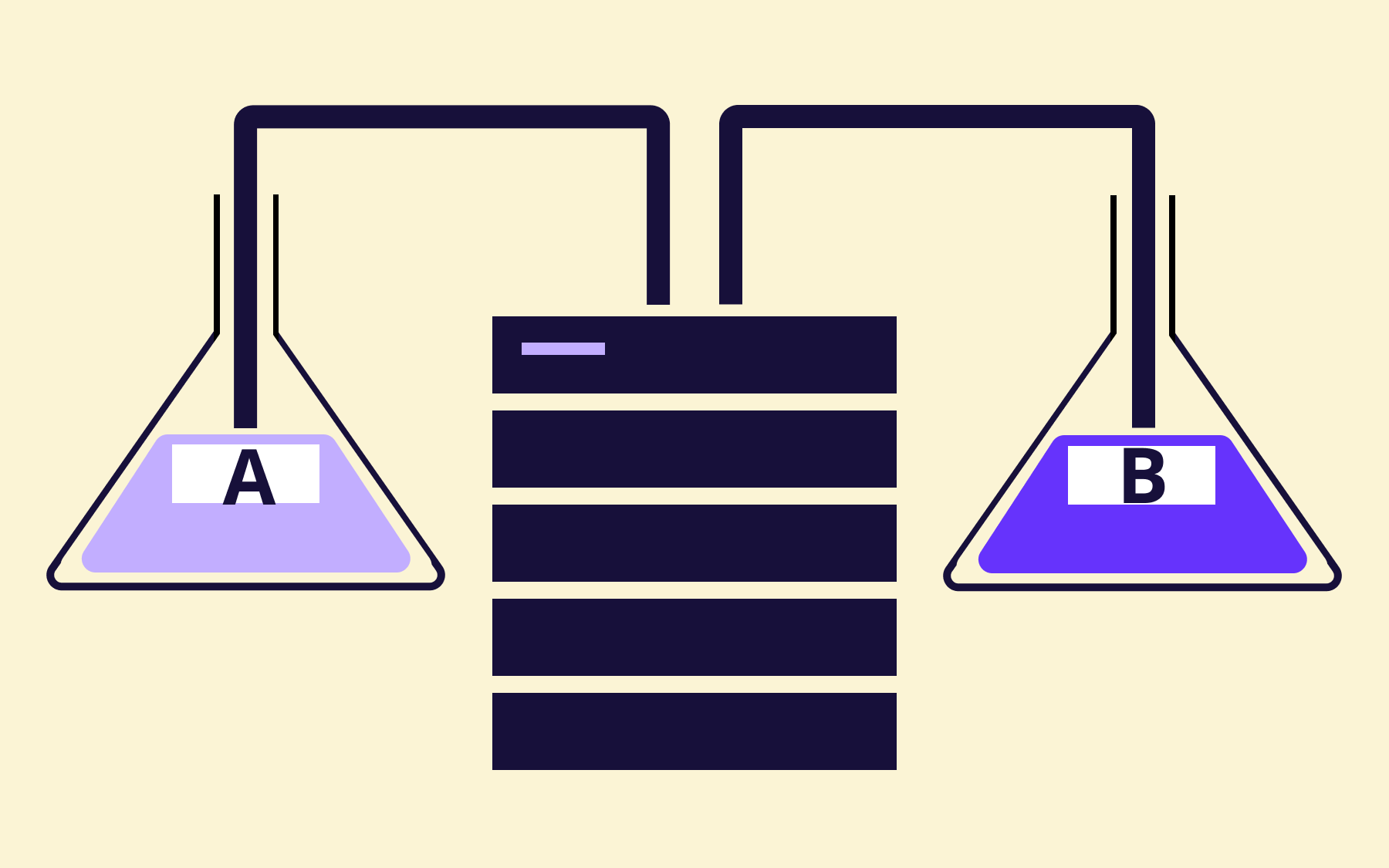
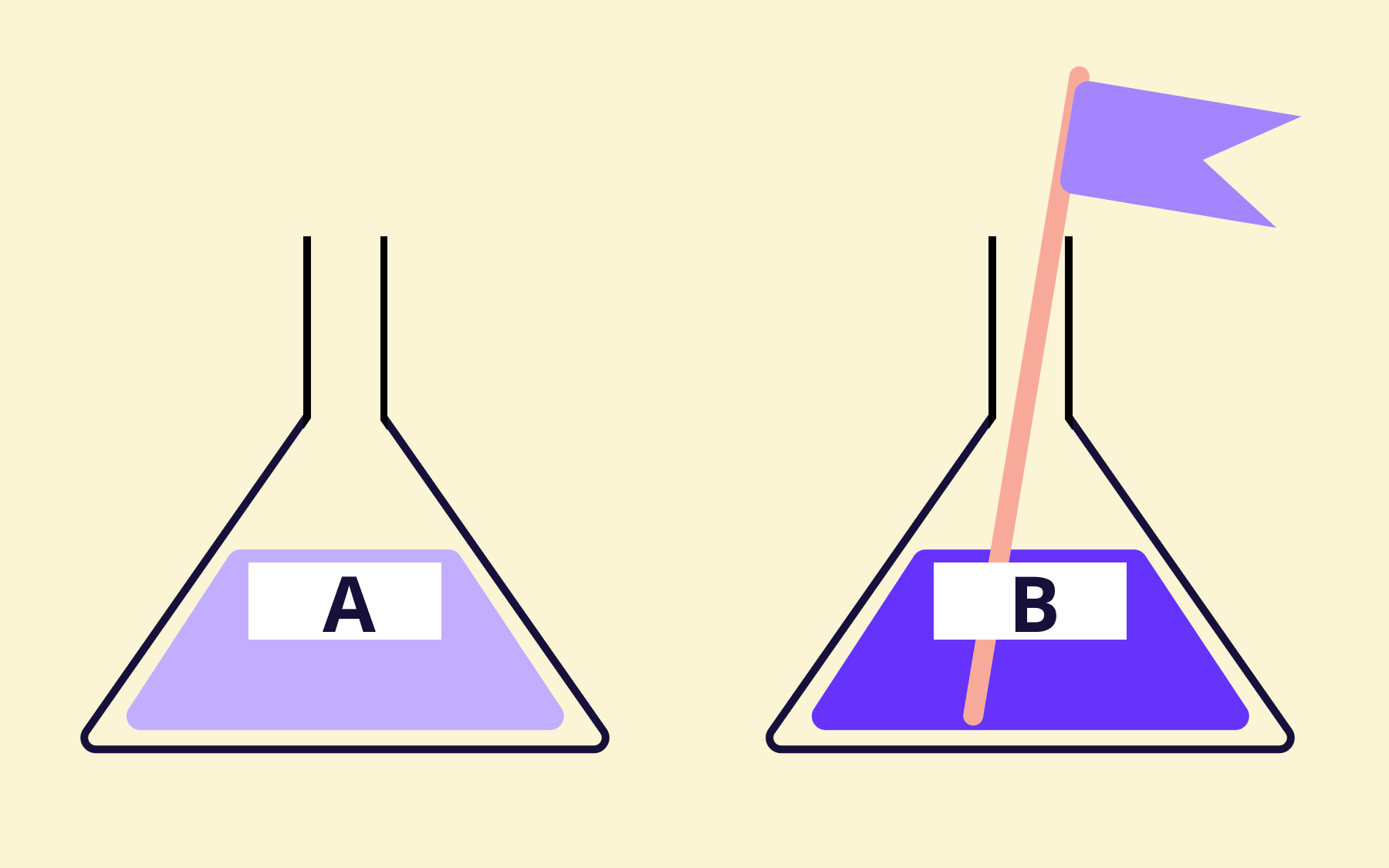
A/B testing in product management takes the form of a controlled experiment. You take a control version of something—a feature, an onboarding step, a pricing tier, or a piece of landing page copy—and compare it against one or more variants, splitting real users into two groups at random: one sees the original version, the other sees the change. Whichever version moves your chosen metric wins, and you roll it out to everyone.
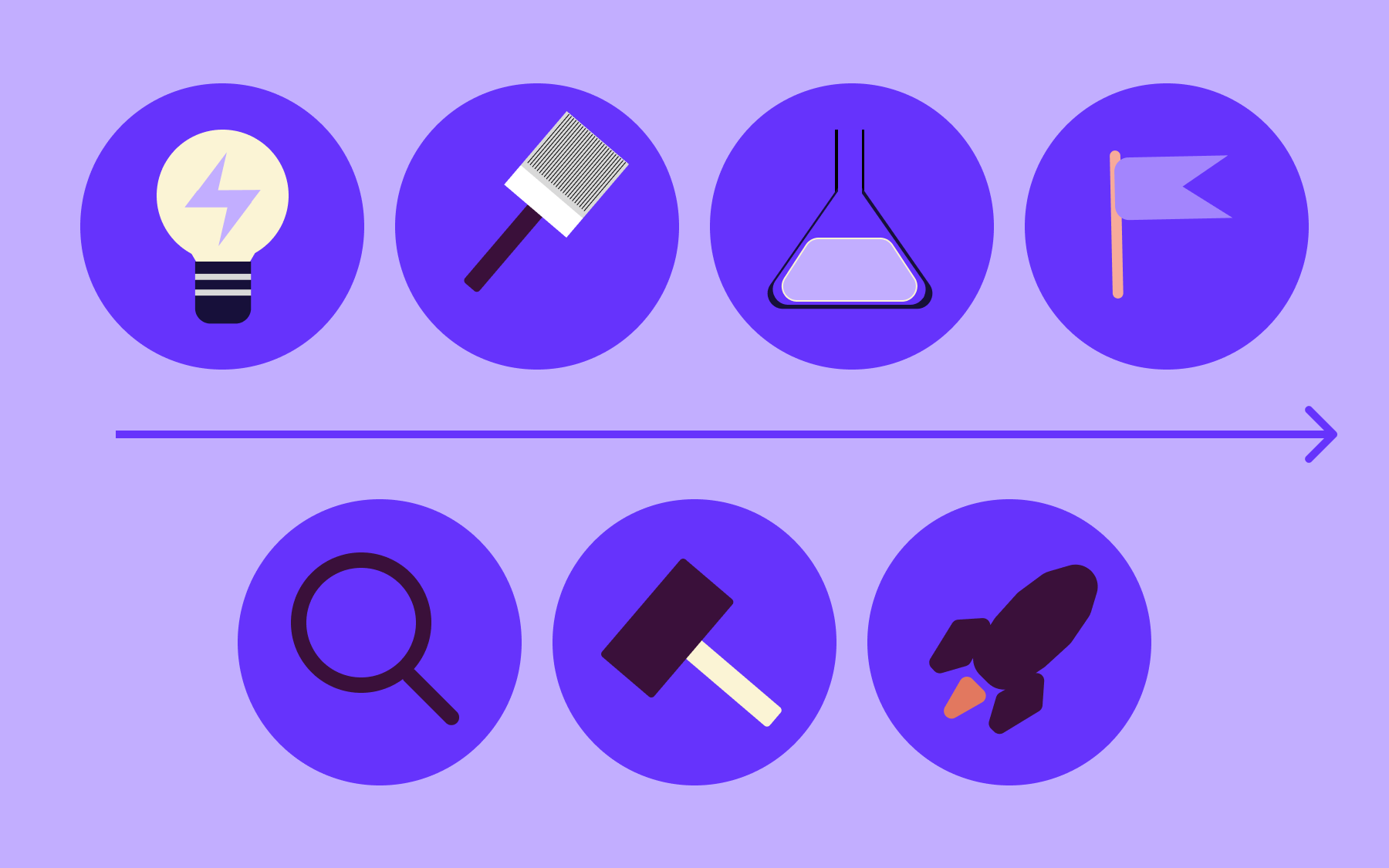
It is important to build discipline for your testing process. Each time, you need to form a hypothesis, run the experiment, collect data, and draw conclusions from what real users actually do rather than what the room agreed sounded right. Product development is, essentially, a scientific study.
In product management specifically, A/B testing replaces those conversations where two people disagree about what users want, and neither has evidence to back up their claim. Instead of settling it in a meeting, you settle it by letting real users interact with two versions of the same thing.
Multivariate testing does something similar but changes several elements simultaneously rather than one. A/B testing gives you a clean answer to one question. Multivariate testing covers several questions at once, while usually needing far more traffic to get a reliable answer from any of them.
Product managers need reliable A/B testing as much as marketers running an A/B test on ad copy to optimise a campaign. A product manager running a test on a new feature is deciding what the product becomes.
How A/B testing works: the process
Start with a hypothesis, and make it specific. Rather than a vague sense that the onboarding could be better, state the change and the number: e.g., shortening the sign-up form from six fields to three will increase completed sign-ups. A hypothesis you can't disprove isn't a hypothesis.
From there, build a sequence to run effective experiments:
- Define the control version and the variant. Change one thing. If you change three different versions of the same element at once, you won't know which one moved the needle.
- Choose your success metric before you look at any data. Conversion rate, click-through rate, activation, retention—whatever ties directly to the hypothesis, decided upfront.
- Calculate the sample size you need, based on how big a change you'd consider meaningful. Teams that guess end up gathering data that looks exciting but means nothing.
- Run the test for a fixed, pre-agreed period. Long enough to cover a full cycle of user behaviour, a week at minimum and often two, so website visitors across a full weekly cycle are represented.
- Analyse for statistical significance, then decide.
Skip any of these steps and you can still get test results. You just can't trust them.
A lot of teams get sloppy at the last step. A statistically significant result means the difference probably isn't random noise. It doesn't mean the difference is big enough to matter to the business. A 0.3% lift can be statistically significant and still not worth the engineering time to maintain two code paths. Keep those two questions separate.
Key concepts in A/B testing product management
You will encounter a handful of terms frequently in every tool, every readout, every meeting, and every dashboard. It's worth having them down:
- Control group and test group. The control group sees the current version; the test group sees the new one. Version A is the control, version B is the challenger.
- Sample size. How many users need to see each version before you can trust the result. Too small, and you're reading tea leaves.
- Statistically significant results. A mathematical signal that the gap between versions likely reflects a real difference in user behaviour, not chance.
- Conversion rate and click-through rate. The two most common success metrics: the share of users who complete a target action, and the share who click through on a call to action.
- Multi-armed bandit tests. Instead of a fixed 50/50 split for the whole test, machine learning shifts traffic toward the better-performing variant as data comes in, trading some statistical cleanliness for fewer users stuck on the losing version.
None of this is complicated; the challenge is in applying it with enough discipline that the result actually means something.
Digital products give you more surfaces to test than a typical e-commerce checkout flow, like onboarding steps, in-app messages, pricing pages, and a single call to action. Many teams default to testing whatever's easiest to change, rather than what would actually move user engagement or customer acquisition.
Common pitfalls in A/B testing product management
The statistical pitfalls are among the biggest to avoid:
- Too small a sample size, without enough data to separate a real effect from noise.
- Peeking at results daily and calling the test the moment it looks significant, which inflates your false-positive rate more than most teams realise.
- Changing multiple product elements, or several different variations of the same specific element, in the same test, and losing the ability to say which one caused what.
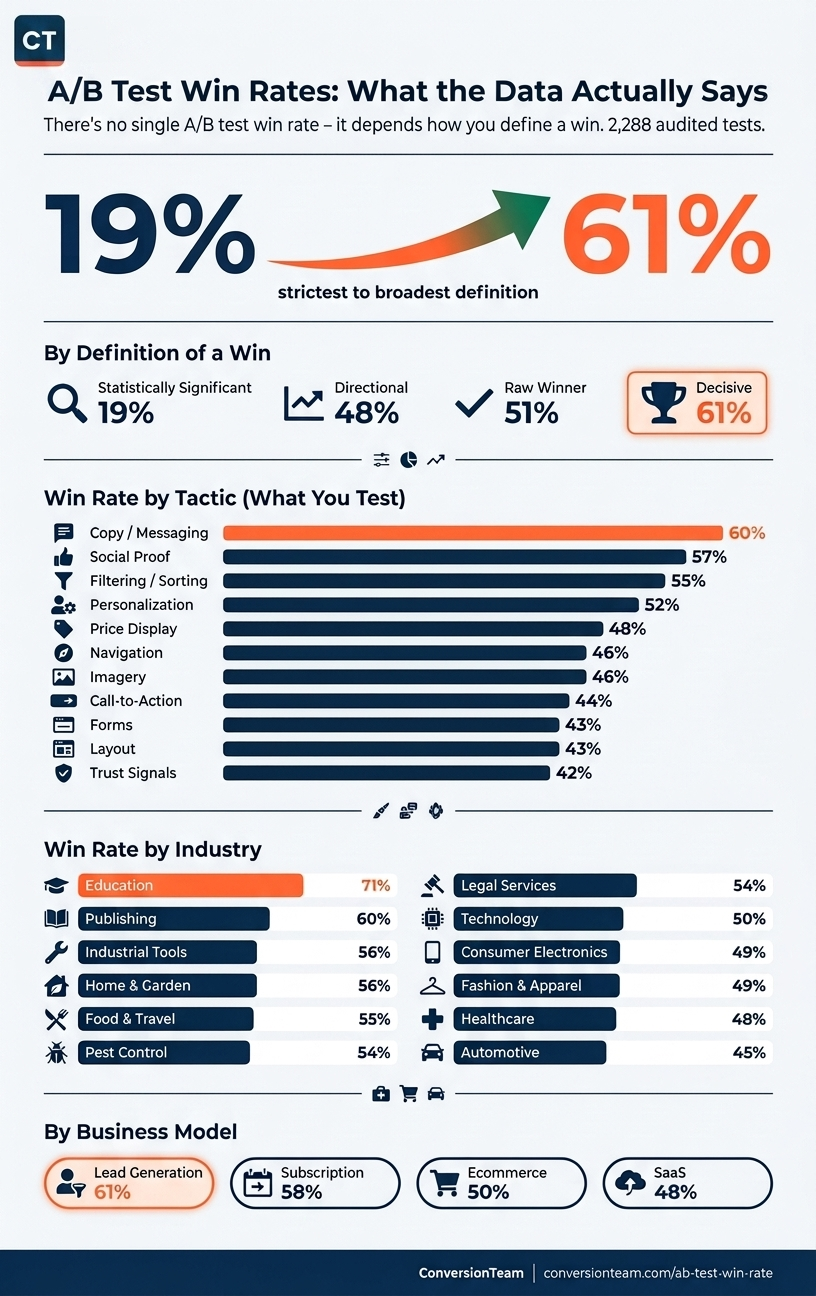
Falling at that first pitfall can have a significant impact. An audit of 2,288 client A/B tests by ConversionTeam found that only 19.1% reached statistical significance, even though roughly half produced some kind of directional lift. Most tests you run won't clear that bar, which is a normal outcome to plan for rather than a sign the process failed.
However, the pitfalls that actually derail A/B testing product management in practice are rarely about the maths. They're about what wasn't decided before the test started:
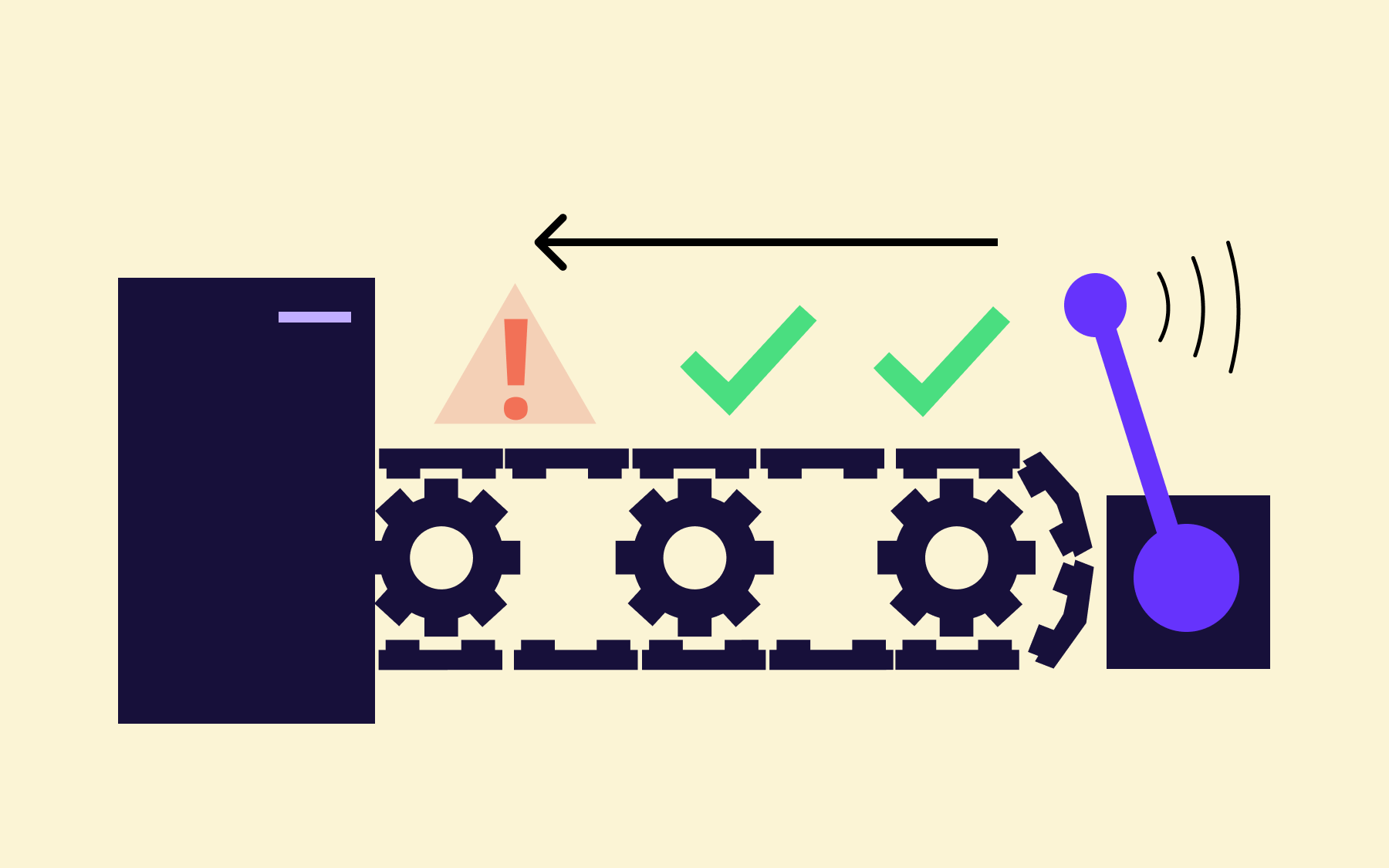
- No agreed rollback plan. The data looks bad by day four, and the team discovers that killing the losing variant means waiting for the next release window. The variant was never isolated behind anything that could be switched off on its own.
- No way to isolate the test from other in-flight work. Two teams ship changes to the same page in the same sprint; the control group stops being a clean control, and nobody notices until they get results that don't make sense.
- No kill criteria agreed in advance. Without a number decided before launch, ending a bad test becomes a debate under pressure—exactly when teams make the worst calls.
Every one of those is an infrastructure problem dressed up as a statistics issue.
A worked example
Say a product manager wants to test a shorter onboarding flow: three steps instead of five. The hypothesis is specific—fewer steps will increase the share of new sign-ups who reach activation within 24 hours.
The control version, five steps, stays live for 90% of new users. The three-step variant rolls out to the remaining 10%, a test group large enough to reach the sample size calculated in advance. Two weeks is the test window; 24-hour activation is the metric that decides the outcome.
By day nine, the variant is showing a meaningful lift, and it's tempting to call it early. Nobody does. The kill criteria and the test length were agreed before launch, not negotiated under pressure.
At the two-week mark, the data holds: the three-step flow produces statistically significant, practically significant gains in activation. The team ramps it to 100% of new users. No deploy, no release window, no ticket in a sprint two weeks out—the flag that was already splitting traffic between control and variant just gets set to the new default.
Solutions for A/B testing in product management
There are plenty of popular A/B testing tools to choose from. You need to decide which one best suits what you're testing.
Dedicated conversion rate optimisation (CRO) platforms are built for marketing surfaces, rather than product management: landing page copy, ad copy, email subject lines, pricing pages. Their visual editors enable non-technical users to spin up a variant fast, which is great when you are testing a web page rather than product logic.
Analytics-bundled testing tools suit teams already living inside a broader analytics stack, like Google Analytics, where a testing layer on top costs less than a separate platform.
Flag-based experimentation solutions benefit product managers specifically. The mechanism is simple: the same flag that splits traffic between control and test group is also the switch that ends the test. Ramp the winner to everyone, or kill the loser outright, without a deploy in between.
It's not the right tool for every job. A landing page copy test still belongs in a CRO platform with a proper visual editor. But for feature-level decisions, where the real cost of a losing test is a bad feature sitting in production until the next release window, flag-based experimentation solves a real problem.
A/B testing product management with feature flags
Feature flags don't just toggle a feature on or off. You can use them to split traffic between a control and a variant and target specific user segments. You can also change the rollout percentage in real time, without touching a deploy pipeline.
Run A/B testing with feature flags, and you are far less likely to encounter the pitfalls from earlier. The rollback plan isn't a plan—it's the same flag you used to launch the test, flipped back:
- Isolating a test from other in-flight work is a targeting rule, not a coordination meeting.
- Because the flag is already there, ramping a winner from a 10% test group to 100% of users takes seconds, not a sprint.
Flagsmith's own Experimentation solution, currently in beta, is built to empower users to test their products. It delivers flag-driven tests, with events collected into a managed data warehouse and read back through a Bayesian statistics engine reporting results against a control group.
Our beta infrastructure for flag-driven product experiments offers exposure tracking, first-exposure attribution, and metric definitions.
For teams already weighing a product experimentation framework or moving toward broader feature experimentation, the same flag infrastructure that handles a simple two-version test extends naturally to more complex designs, without you needing to add a second tool to maintain anything.
Conclusion
To run effective A/B testing in product management, you need to build a process where the statistics can be trusted, and have a way to act on the result the moment it's ready, not two sprints later.
Make the hypothesis specific and get the sample size right. Agree on the rollback plan before launch. Do that consistently, and reliable results start compounding: higher engagement on one test, increased conversion on the next. That's the way this process pays off.
If you're running tests that need to ship the moment the data's in, not the moment engineering has a release window, sign up for a free Flagsmith account and see how flag-driven experimentation fits your process.
A/B testing in product management FAQs
What is A/B testing in product management?
It's a controlled experiment where a product manager compares a control version of a feature or product element against one or more variants, splitting real users between them, to see which version performs better against a chosen metric. The result replaces opinion with evidence in a product decision.
How long should an A/B test run?
Long enough to reach the sample size calculated before the test started, and to cover at least one full cycle of user behaviour, usually a week at minimum and often two. Running a test for a fixed, pre-agreed period, rather than stopping the moment it looks significant, protects the result from the peeking problem that inflates false positives.
What's the difference between A/B testing and multivariate testing?
A/B testing compares two versions that differ by one element, which makes it straightforward to say what caused any change in the result. Multivariate testing changes several elements at once to find the best combination, requiring a much larger user base to produce a reliable answer, since traffic gets split across every combination being tested.







































OpenTelemetry, without the vendor lock-in: Introducing full observability for Open Source and Self-Hosted Flagsmith customers