Automated Regression Testing: A Complete Guide for Engineering Teams

Most engineering teams are automating regression testing, but there are still decisions to make: what to automate first, which tools actually fit your stack, and how to stop a growing suite from turning into dead weight nobody trusts.
This guide covers what automated regression testing is, why it's worth the investment in setup, and a practical, step-by-step approach to doing it well.
It also covers the best practices that keep an automated suite reliable over time, the challenges most teams hit along the way, and where feature flags fit in for the regressions that get through anyway.
What is automated regression testing?
Automated regression testing is the practice of using code and tooling, rather than manual effort, to re-run a set of test cases against an application after a change, confirming that existing functionality still behaves as expected. Instead of someone working through the same checklist by hand every time, an automated test suite runs those checks consistently, usually as part of the delivery pipelines, without needing anyone to remember to run them.
It's one of the more repetitive parts of software testing, which is exactly why it's such a natural candidate for automation.
The core idea is the same as regression testing: check that what worked before still works now. What changes is who, or what, does the checking.
Automation is best utilised to replace repetitive, well-defined, and often-run tasks: the ones that need to be done the same way every time, on every commit or every release.
It's a poorer fit for exploratory testing, genuinely novel functionality without established test cases yet, or anything where visual judgement matters more than a pass/fail script can capture.
Most mature testing strategies use both, automating what's stable and repeatable while keeping manual testers focused on the judgement calls a script can't make.
Why automate regression testing?
A manual regression pass across even a moderately sized application means a test engineer working through dozens or hundreds of test cases by hand, and that same set of test cases needs re-running every time existing code changes.
As a codebase and its test suite both grow across the software development life cycle, manual regression testing can usually only scale with increased headcount.
Testing is one of the most expensive parts of the software development process, however it's done. According to TestMu AI's Future of Quality Assurance report, almost a third (30.3%) of teams spend at least 26% of their development budget on testing—and that holds true even for fully automated teams, since tooling, infrastructure, and maintenance all cost money too.

What automation changes isn't the fact that you face these testing costs, but how that cost scales. It isn't tied to headcount, so once a test script exists and works, running it again costs almost nothing—whether the change is a bug fix or a chunk of new code.
The saving shows up as a lower, more predictable cost per run, not necessarily a lower total testing bill, which depends on how well the suite is maintained over time.
Automating your regression testing can also improve quality. Working through the same test cases for the tenth time by hand is more prone to error than a script is, regardless of who is doing it.
Automated tests don't skip steps, misread a result, get less careful near the end of a long test run, or forget to check an edge case just because the last ten runs passed.
Automated regression testing is consistent, ensuring the same checks run the same way, every single time, regardless of who's on the team that week or how close it is to a release deadline.
To justify the investment internally, make a simple comparison: the time it takes to write and maintain a test script once against the time it would take a person to run that same test case manually, multiplied by every release where it needs to run again.
For a test case that runs weekly, the payback period is often measured in weeks. For one that runs on every commit, it can be closer to days.
The setup takes time, but this pays off as you make ongoing savings, which tends to appeal to stakeholders who control the budget for test automation tooling or the engineering time to build it.
Once they're freed from repetitive execution, engineers are able to spend more time on testing that genuinely benefits from human involvement: exploratory testing, edge cases nobody thought to script, and assessing whether something actually feels right to use, not just whether it passes requirements.
How to do automated regression testing
There's no single correct way to automate regression testing, but most teams follow a fairly consistent path to get there. The first two steps below are usually one-off decisions: what to automate and which tools to use. Everything after that—building, integrating, maintaining, and evolving the suite—isn't a sequence of phases so much as ongoing habits that continue for as long as the codebase does.
Audit and prioritise what to automate
Before writing a single test script, work out what's actually worth automating. Not every corner of an application deserves the same investment.
Start by mapping your core functionality: the flows that, if broken, would do the most damage to users or revenue. A checkout flow, an authentication step, a billing interaction, and a data export are more important than a rarely used settings page, and your regression test selection should reflect that.
Look at your existing test cases, too. Some will already cover this ground; others will turn out to be testing something that barely matters anymore.
Prioritise test cases by business risk and change frequency, not by how easy they are to automate. A feature that changes often and matters a lot to users deserves automated coverage even if it's a complex test scenario to script. A stable, low-traffic feature that rarely changes might not be worth the maintenance overhead of automating at all.
Choose the right tools for each test layer
One of the more common mistakes teams make is looking for a single automation tool to cover everything. In practice, different layers of your application call for different automated regression testing tools, and picking per layer works better than forcing one framework to do a job it wasn't built for.
- Unit-level automated test cases check individual functions or components in isolation. They're the fastest and cheapest to run, making them a natural first line of defence against a regression.
- Integration testing sits a level up, validating that those components still work correctly once combined.
- API and service-level tests validate the contracts between parts of your system directly, without a user interface getting in the way. Together, these tests catch a class of regression that unit tests can't reach, and that end-to-end tests catch too slowly.
- End-to-end and UI testing tools simulate an actual user journey through the application, making them essential for catching regressions in complex test scenarios that only show up when multiple parts of the system interact, but they're also the slowest and most brittle layer to maintain.
- Visual regression tools compare screenshots or rendered output between versions, catching layout and styling regressions that none of the other layers are built to see.
Most reliable testing setups combine several of these categories rather than leaning on just one. A test automation tool chosen for its UI capabilities alone will leave gaps at the API and unit level, and vice versa.
Build and organise your regression test suite
Once you know what you're automating and with what, the next step is structuring the regression test suite itself. A single, monolithic test suite that runs everything every time is simple to set up but expensive to run and slow to give feedback.
Organise test cases by feature area or by risk level, so you can run a fast, targeted subset for a quick check and the full regression suite for a release gate.
Tag or categorise reusable test cases clearly enough that anyone on the development team can find the relevant ones without reading through the entire test scripts folder.
This structure is what makes it possible to run regression tests selectively later, instead of treating every change as a reason to execute the entire suite.
For components of the test suite that require a deployed environment to run against (e.g., browser-based testing like Selenium), the environment and infrastructure used is important, but can be dependent on your use case and infrastructure maturity level.
Perhaps the easiest option is to run the regression test suite against a dedicated test environment, ideally one that is kept as close to your production environment as possible.
Another option is to create ephemeral environments when running your test suite—the benefit of this approach is that any test data can be immediately cleaned up.
The final option, and perhaps the most effective, is to run the suite against your production environment. However, this would likely be an addition to one of the previous options to ensure that most regressions are caught earlier in the process.
Integrate automated regression tests into your CI/CD pipeline
Automation that still needs a human to press go isn't automation; it's a script with extra steps.
Regression tests are truly valuable when they run automatically as part of your CI/CD pipeline, triggered by every pull request or merge, without anyone needing to think about it. Here, automated regression testing overlaps with the broader idea of continuous testing: running checks at every stage of delivery rather than as a single phase before release.
Split your suite by speed. A quick smoke test or a handful of sanity tests can confirm the basics still work before anything heavier runs.
Fast, high-priority regression test cases, the ones covering core functionality, belong on every commit or pull request, as a build that fails one of these should never move forward.
Slower, more comprehensive automated test cases, including full end-to-end and cross-browser coverage across multiple platforms, from mobile testing through to desktop testing, can run at merge time or on a schedule closer to a release.
This split keeps the feedback loop fast where it matters most, without giving up the deeper coverage a complete regression run provides.
Treat a failing regression test as a genuine gate, not a report you can choose to ignore. If a broken build can still merge on the assumption that the tests will get fixed later, the automation isn't actually protecting anything.
Maintain and evolve the suite over time
An automated regression test suite is not a one-time project. Test maintenance is a continuous cost, and left untended, a suite accumulates outdated tests and false failures while its run times quietly creep upward, until the development team starts distrusting its own results.
Flaky tests, the ones that fail intermittently for reasons unrelated to the code being tested, are the fastest way to destroy trust in a suite. Once a test fails often enough without a real bug behind it, engineers start ignoring failed test cases altogether, defeating the purpose of having them.
Investigate and fix or remove flaky tests quickly rather than letting them accumulate, and don't assume re-running the same tests a second time and getting a pass means the first failure can be ignored.
Retire obsolete test cases as features change or get removed. A test written for functionality that no longer exists doesn't just waste run time; it can produce false failures that send someone chasing a problem that isn't there.
Review the suite periodically, not just when something breaks.
Write a new regression test for every bug fix that reaches production. If a bug got through, the gap it exposed is worth closing permanently, and a fresh, targeted test case is the cheapest way to make sure that specific regression can't recur silently.
Walk back through the test steps that missed it and ask why the existing suite didn't catch it first.
Automated regression testing best practices
Beyond the step-by-step process, a handful of habits separate a regression suite that catches real issues from one that just generates noise.
- Prioritise by risk, not raw coverage. Running a high test percentage in low-risk areas can miss the regressions that actually matter. Weight your regression testing strategy toward business impact.
- Run fast tests on every commit, full suites at release gates. Not every automated test case needs to run on every change. Reserve your most comprehensive, slowest test suite for release boundaries or merges to the main branch.
- Write a test for every fixed bug. This is one of the highest-value habits in automated regression testing, since it turns every past failure into permanent coverage.
- Keep the suite lean. A bloated automation test suite slows pipelines and erodes confidence. Fewer, well-maintained regression test cases catch more real problems in practice than a sprawling suite nobody fully trusts.
- Monitor for false failures. Track flakiness as a metric in its own right, not just individual failed tests. A rising rate of false failures is an early warning that maintenance is falling behind.
- Separate test data from production data. Automated test cases depend on consistent, predictable test data. Sharing an environment or dataset with production invites inconsistent results and, occasionally, real damage.
- Review the suite on a schedule. Setting a recurring point, monthly or quarterly, works for most teams looking for obsolete test cases, rising run times, and areas of the application that have outgrown their current test coverage.
- Make the test suite someone's job, not just its output. Whether that's a QA team or engineers adding tests as they ship features, the suite needs an owner who actively maintains it, not a black box that occasionally sends a red or green result.
Common challenges with automated regression testing
Automated regression testing solves real problems, but it isn't free.
Setup takes genuine time and expertise. Writing reliable test scripts, choosing the right regression testing tools, and wiring everything into a CI/CD pipeline is a real project, not a weekend task, and the payoff comes later rather than immediately.
Tool sprawl is a common side effect of automating across multiple layers. Unit, API, end-to-end, and visual regression tooling rarely comes from a single vendor, and keeping several tools working together adds an additional maintenance burden.
No regression test suite, however thorough, can account for every real-world condition: unusual data states, latency issues, third-party services behaving unexpectedly, or infrastructure quirks that only show up in production. Automated regression testing reduces risk considerably, but doesn't eliminate coverage gaps completely.
Flaky tests remain the most cited frustration among test engineers using automation. According to TestMu AI’s Future of Quality Assurance report, respondents say they spend 10.4% of their time setting up and maintaining test environments, and 7.8% working on fixing flaky tests.
Meanwhile, in PractiTest’s 2024 State of Testing report, 60% of organizations said their test cases were either not well-written, poorly maintained, or duplicated—key contributors to flaky automated tests.

A test suite that occasionally fails for reasons that have nothing to do with the code under test slowly trains a team to stop paying attention to failures, which is arguably more dangerous than having no automation at all: a green build stops meaning anything, and a real regression can hide behind the noise until a user finds it first.
How AI is accelerating automated regression testing
AI is starting to change what an automated regression suite actually needs from a person, not just how fast it runs.
According to the State of Testing 2025 report from PractiTest, automation has already replaced 75% or more of manual testing effort for a fifth of teams surveyed, up from 18% two years earlier, while the share reporting no automation impact at all has dropped from 26% to 14% over the same period.
Test case creation is where AI is landing first: 41% of respondents already use AI tools to generate test cases, well ahead of any other use case in the survey.
That fact fits how most regression suites actually grow, since writing a new test case for every fixed bug is one of the more repetitive parts of test maintenance, and it's exactly the kind of work AI tools are best suited to speeding up.
The bigger shift respondents expect isn't just faster execution. Improved test maintenance through self-healing tests, where a script adapts automatically when a UI selector or workflow changes instead of failing outright, ranked as one of the top expected benefits, addressing the flaky-test and maintenance burden that erodes trust in a regression suite over time.
Adoption still has real limits.
Data privacy and security concerns remain the biggest barrier to using AI in QA, cited by more than half of respondents, ahead of a lack of skilled personnel and uncertainty about the return on investment.

Nearly half the teams surveyed aren't using AI tools in their process yet. AI is accelerating what automated regression testing can do, but it's supplementing the discipline covered above, not replacing the fundamentals: what to prioritise, which tools to pick, and how to keep a suite maintained.
Where feature flags fit in
Even a well-built, thoroughly maintained automated regression suite has a limit.
Running the suite against production, as suggested earlier, doesn't close the gap entirely: real user data, third-party services under genuine load, and edge cases that only exist at scale can all produce behaviours no test suite fully anticipates.
Automated regression testing ensures existing functionality holds up against everything you thought to test for. It can't test for what nobody anticipated.
That's where feature flags come in as a practical complement to automated regression testing.
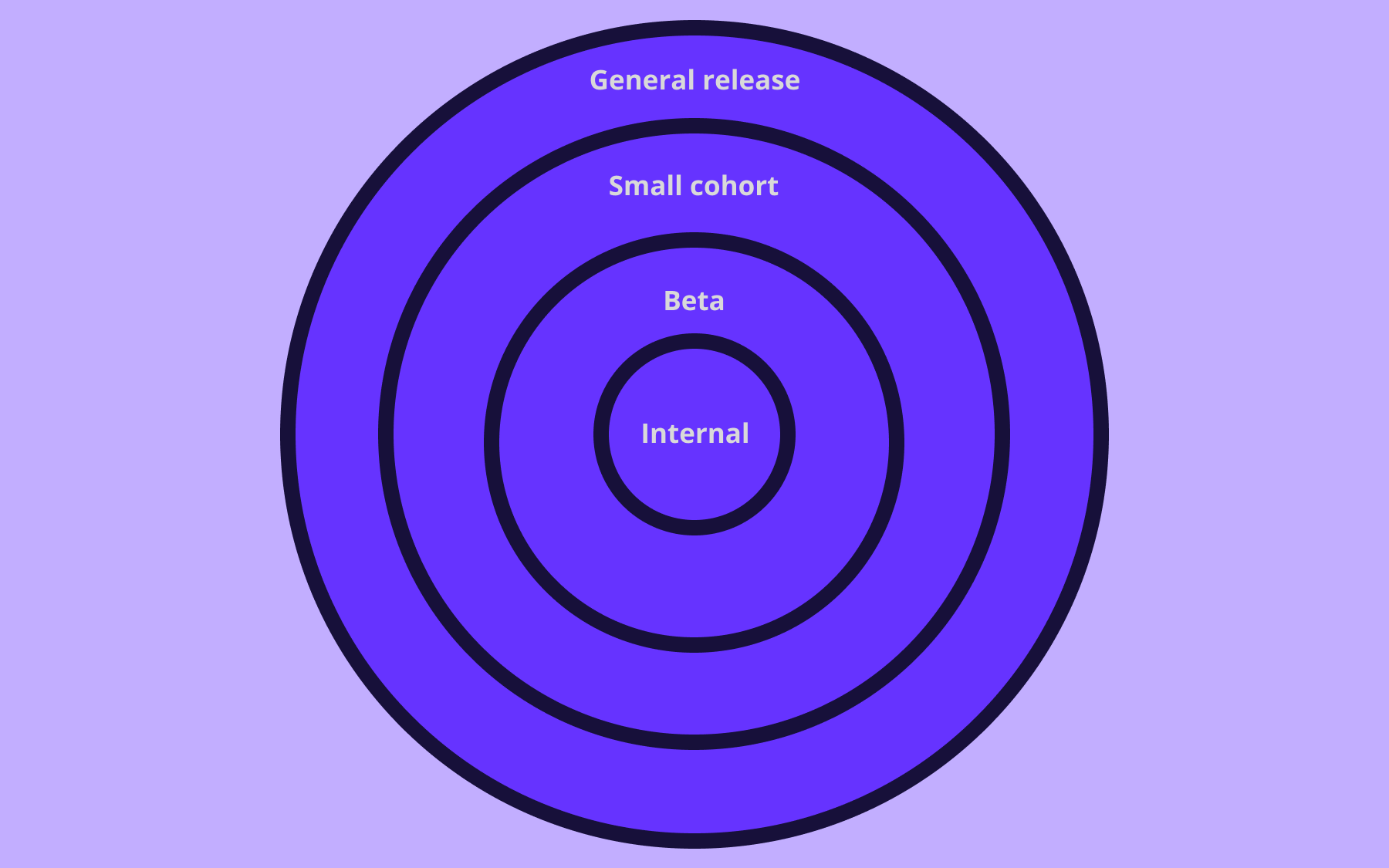
A staged or progressive rollout lets you release a change to a small percentage of real users first, rather than your entire user base at once. If a regression slipped through every layer of your automated suite, it only affects a fraction of people while your team still has time to notice and respond, instead of your whole customer base hitting it simultaneously.
Environment-specific flag control solves another problem: running your tests against a known, stable application state in whichever environment you’re testing against, without half-finished features leaking into that environment and producing false failures. You get a cleaner signal from the tests you already have.
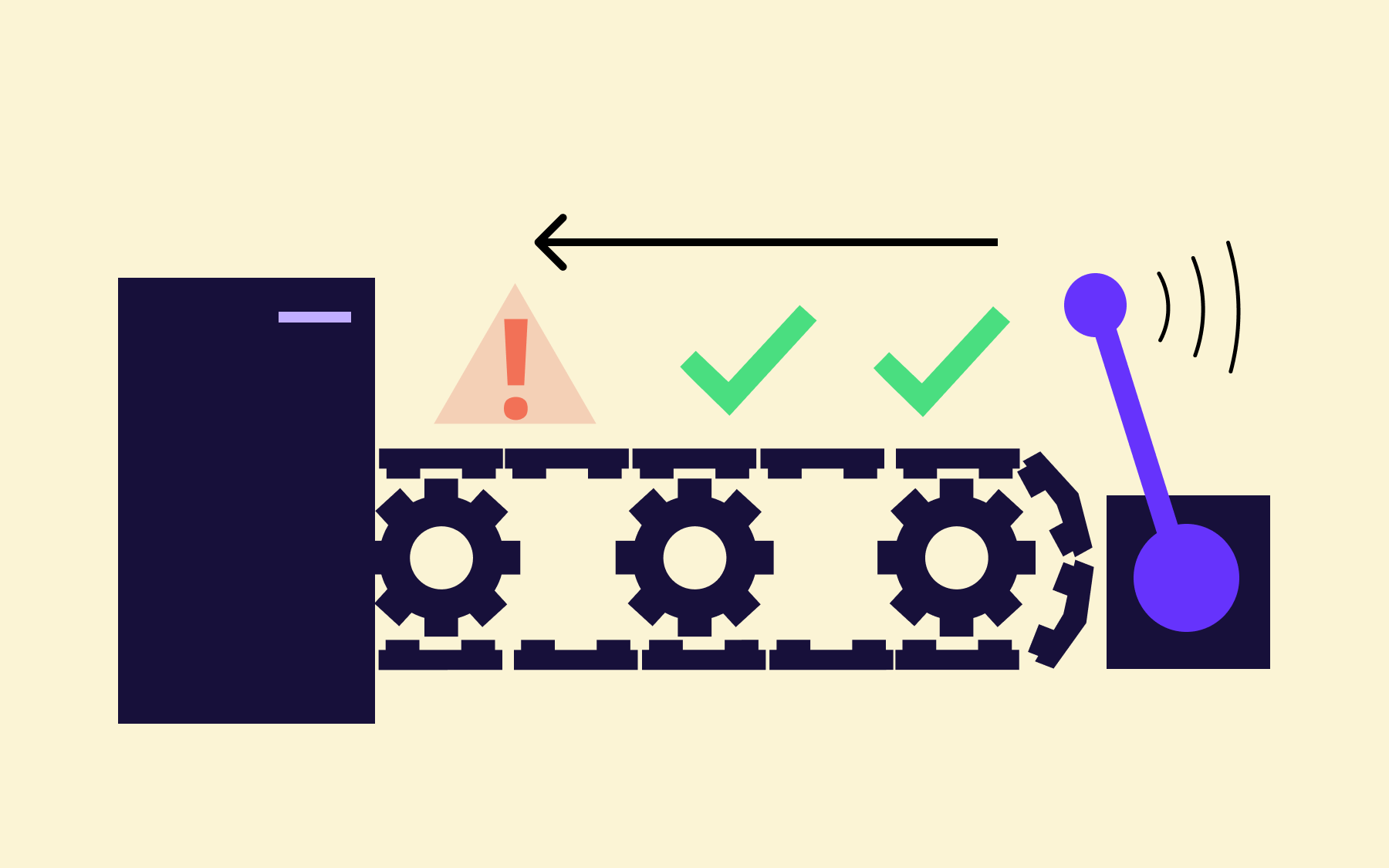
When something does get through, instant rollback turns what would otherwise be an incident into a quick, contained fix.
Switching a flag off takes seconds and needs no redeployment or hotfix pipeline, and no waiting for a deployment window either. The previous, known-good state comes back immediately while the actual fix gets prepared properly.
Feature flags are also highly useful in an AI-enabled testing workflow. With feature flagging, you have a backstop in place to test AI tools in production environments, so you can quickly roll back if something goes wrong. See how Flagsmith helps you ship trustworthy AI features.
None of this replaces a solid automated regression test suite. Feature flags limit the blast radius of a regression that gets through; they don't prevent regressions from happening.
The two disciplines work best together: automated regression testing does everything it can before code reaches production, and feature flags handle the part no test suite, however well maintained, ever fully can.
Conclusion
Automated regression testing is an ongoing discipline: choosing what's worth automating, matching tools to the right layer of your application, wiring everything into your CI/CD pipeline, and maintaining the suite so it keeps earning the team's trust as the codebase grows.
Get that right, and automation turns regression testing from a recurring bottleneck into something that runs quietly in the background, catching real problems before your users ever see them.
No suite catches everything, though, which is why it's worth pairing that discipline with a way to limit the damage when something does get through: gradual rollouts, environment control, and an instant rollback if you need it.
Sign up for Flagsmith for free and bring that same safety net to your next release.
Automated regression testing FAQs
How often should automated regression tests run?
Your fastest, highest-priority regression test cases, covering core functionality, should run on every commit or pull request.
A broader, more complete regression suite, including slower end-to-end and cross-browser tests, is better suited to release gates or merges into the main branch, where the extra run time matters less than the depth of coverage.
Can automated regression testing fully replace manual testing?
No, and it isn't meant to. Automated regression testing is best suited to repetitive, well-defined test cases that need to pass the same way every time.
Manual testers still bring real value in exploratory testing, UI-heavy scenarios where human judgement matters, and genuinely novel functionality that doesn't have established test cases yet. Most effective testing strategies combine both rather than choosing one over the other.
What's a good first step if my team is still testing manually?
Start small rather than trying to automate everything at once. Pick a handful of your most business-critical, most frequently run test cases, the ones covering core functionality like login or checkout, and automate those first.
A working, trusted suite covering a narrow slice of the application is worth more early on than a sprawling one that nobody has finished validating yet.

















































OpenTelemetry, without the vendor lock-in: Introducing full observability for Open Source and Self-Hosted Flagsmith customers